
A dark lens does not guarantee strong eye protection. Lens colour only changes how bright the world looks; the label must still promise 100% UVA and UVB protection or UV400 coverage. Once that safety box is checked, the frame shape becomes a balance problem: you want contrast, correct scale, and a fit that stays put when you move.
After years of buying sunglasses that looked good on a product page but wrong in a mirror, I now judge every pair in this order: face proportions, frame measurements, bridge fit, lens coverage, then style. Face-shape advice is useful, but it is not a rigid rulebook. Your actual measurements matter more than a social-media chart.
How do you identify your face shape?
Measure width, length, jaw, and forehead
Stand in front of a mirror with your hair pulled back. Use a washable marker to place four small dots: the widest point of your forehead, the widest point of each cheekbone, and the corners of your jaw. Measure forehead width, cheekbone width, jaw width, and total face length from hairline to chin. You do not need perfect numbers. The useful question is whether your face is longer than it is wide, and whether your jaw or forehead is the widest area.
A round face usually has similar length and width with softer cheeks and a curved jaw. A square face has similar length and width too, but a stronger jaw and straighter sides. An oval face is longer than it is wide, with a gently rounded jaw. A heart-shaped face is wider at the forehead and narrower at the chin. An oblong face is clearly longer than it is wide, often with a tall forehead or long chin.
Do not mistake hairstyle or camera distortion for bone structure
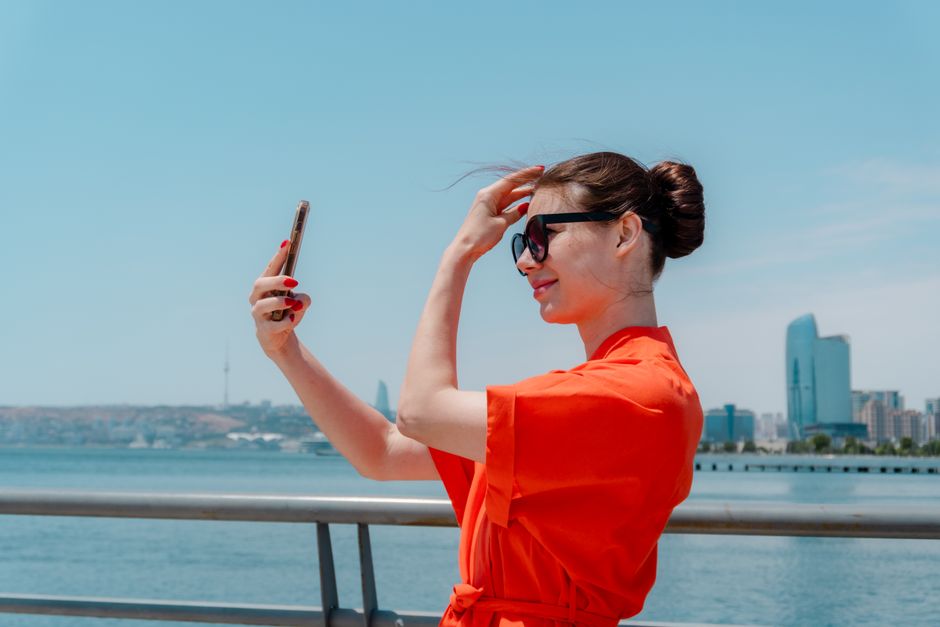
Selfies make this harder. A wide-angle phone camera can stretch the centre of your face and make frames appear smaller than they are. Check your face in a straight-on bathroom mirror, then use a normal-distance photo taken from about six feet away. If your hair is covering the jaw or temples, tie it back before judging the outline.
My verdict: use face shape as a starting filter, not a final answer. If you sit between two categories, choose the frame based on width and bridge fit. A technically correct frame in a less expected shape will look better than a supposedly perfect shape that presses your temples.
Which sunglasses frame shape balances each face?
Use contrast instead of copying your face outline
The easiest rule is contrast. Soft, rounded faces gain definition from square or rectangular frames. Strong, angular faces usually look better with rounder edges, thinner rims, or curved lenses. Long faces benefit from taller lenses, while narrow faces need frames that do not extend far beyond the temples.
| Face shape | Best frame geometry | What to avoid | Reason |
|---|---|---|---|
| Round | Square, rectangular, soft-angled | Very small round frames | Extra angles add structure and make the face look longer. |
| Square | Round, oval, gently curved | Very boxy frames with sharp corners | Curves soften a strong jaw without hiding it. |
| Oval | Most shapes, especially balanced rectangles | Frames much wider than the cheekbones | Extreme width can overwhelm otherwise even proportions. |
| Heart | Light rimmed, rounded, bottom-heavy | Heavy top bars and oversized brow lines | Less visual weight at the forehead balances the chin. |
| Oblong | Tall lenses, deeper aviators, bold temples | Very narrow, shallow lenses | More lens height breaks up facial length. |
Frame width matters more than the name of the shape
Aviator, cat-eye, and wayfarer are style labels, not guarantees of fit. A narrow aviator can make a wide face look crowded. A wide rectangular frame can make a narrow face disappear behind the lenses. The front of the frame should sit close to the width of your cheekbones, with only a small amount of extension at each side.
My verdict: start with the opposite geometry, then reject any frame that is too wide, too shallow, or too heavy at the bridge. That two-step filter works more reliably than buying a frame because a chart says your face is oval.
How should you measure sunglasses before buying?
Read the numbers printed inside an old pair
Most sunglasses have three numbers printed on the inside of one temple, such as 52-20-140. The first number is lens width in millimeters, the second is bridge width, and the third is temple length. If your best-fitting pair is 52-20-140, a new frame around 51-21-140 or 53-19-140 is usually a sensible starting point. It is not a perfect mathematical match because frame shapes and hinge placement change the real fit.
- Measure the total front width of a pair that already fits. Include the rims, but do not include the curved temple arms.
- Compare that width with the new frame’s listed front width when the retailer provides it.
- Check bridge style. A low bridge or a flat nose often needs adjustable nose pads or a dedicated low-bridge fit.
- Look at lens height. Sunglasses that sit too low can touch your cheeks, while shallow lenses leave more light around the lower edge.
- Check the temple arms. They should close without flaring outward or squeezing behind your ears.
Run the movement test, not only the mirror test
After putting on a pair, smile, raise your eyebrows, look down, and turn your head quickly. The frame should not slide, pinch, or touch your cheeks. Hold your head still for ten seconds and check for pressure at the temples. A frame that feels tight on the first try will usually become irritating after an hour in the sun.
Do not buy a smaller frame just because it looks sharper. Narrow frames can create side glare, press on the nose, and make the eyes sit too close to the rim. If the bridge is the problem but the width is right, look for adjustable nose pads instead of dropping to a smaller size. My verdict: match the numbers of your best-fitting glasses first, then fine-tune the shape.
What mistakes make sunglasses look wrong?
Should frames match your face shape exactly?
No. Matching a round face with round lenses often creates a soft, repetitive outline. Start with contrast, but let your personal style decide how much contrast you want. A square face can wear a square frame if the corners are softened and the width is correct. The shape rule should narrow the search, not lock you into one silhouette.
Are darker or polarized lenses always better?
Darkness is not the same as UV protection, and polarization mainly reduces reflected glare rather than blocking more ultraviolet light. Polarized lenses are excellent for driving, beaches, snow, and water. They are less useful if your main problem is reading phone screens through certain vehicle displays, which can appear dim or distorted depending on the screen.
When should you buy a different frame?
Choose a different model when the bridge slides, the temples pinch, the lenses touch your cheeks, or light enters from large gaps at the sides. Also reject a pair that sits so low that your eyebrows disappear behind the top rim unless that is the deliberate look you want. If your prescription is strong, ask an optician about lens thickness, optical centre, and frame curvature before ordering. Very large or deeply curved sunglasses can create more prescription complications than a moderate, flatter frame.
My final verdict by situation: choose the Ray-Ban Original Wayfarer Classic for a classic medium-size frame, the Oakley Holbrook for active rectangular coverage, the Persol PO0649 for premium style, the Maui Jim Ho’okipa for glare-heavy days, and the Smith Lowdown XL 2 when standard frames feel too small.
The single most important takeaway is this: choose sunglasses by measured width and bridge fit first, then use face-shape contrast to find the style that makes your features look balanced.