
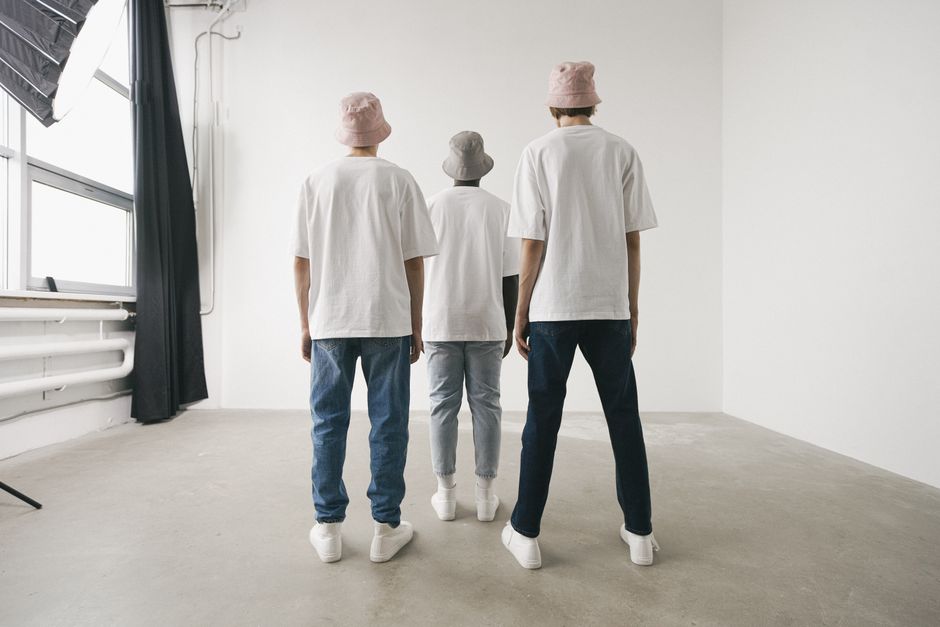
You pull a white t-shirt from your drawer. It’s three years old. The collar is a wavy mess. The armpits have tiny holes. The hem is curling up. This exact scenario happens to millions of people every season. The problem isn’t that you’re hard on clothes. The problem is that most clothing basics are built to fail within 12-24 months. But some pieces genuinely survive ten years of regular wear. Here’s exactly how to spot those pieces before you buy.
What Makes a Basic Last 10 Years? The Physics of Fabric Failure
Clothing fails in predictable ways. Holes appear at stress points. Seams split. Collars lose shape. Colors fade unevenly. Each failure traces back to one of three root causes: fiber quality, construction technique, or finishing process. Understanding these three factors lets you evaluate any garment in under 60 seconds.
Fiber quality is the starting point. A cotton fiber’s length determines everything. Longer fibers (called long-staple or extra-long-staple cotton) twist together more tightly, creating stronger yarn. Short fibers create fuzzy, weak yarn that pills and thins. Egyptian cotton, Supima cotton, and Sea Island cotton are all long-staple varieties. A basic cotton t-shirt made from long-staple fibers costs $40-80 but lasts 5-10 years. A $12 fast-fashion t-shirt uses short fibers and lasts 6 months.
Construction technique matters just as much. The number of stitches per inch (SPI) on a seam is a direct quality indicator. High-quality garments use 8-12 stitches per inch. Cheap garments use 4-6. Fewer stitches means weaker seams that pop open under tension. You can count SPI on any garment in under 10 seconds.
Finishing processes lock in durability. Mercerization treats cotton fibers with sodium hydroxide under tension. This strengthens the fiber, increases luster, and improves dye uptake. Mercerized cotton resists fading and holds its shape longer. Garment-dyeing (dyeing the finished piece rather than the fabric) creates softer texture but weaker color fastness. Piece-dyeing (dyeing the fabric before cutting) produces more durable color.
The Fabric Weight Test: GSM Numbers That Matter

GSM stands for grams per square meter. It measures fabric density. Higher GSM means thicker, heavier, more durable fabric. Lower GSM means lighter, thinner, more delicate fabric. This single number predicts longevity better than any other spec.
| Garment Type | Low Quality (GSM) | Medium Quality (GSM) | High Quality (GSM) |
|---|---|---|---|
| T-shirt | 120-150 | 160-190 | 200-240 |
| Sweater (cotton) | 180-220 | 230-280 | 290-350 |
| Denim jeans | 8-10 oz | 11-13 oz | 14-16 oz |
| Button-down shirt | 80-100 | 110-140 | 150-180 |
Most brands don’t list GSM on the tag. You have to feel it. Pick up the garment. Hold it by one shoulder. Does it drape heavily or float like tissue paper? Heavy drape = higher GSM = longer life. A 220-GSM t-shirt from a brand like Lady White Co. or Asket costs $55-85 but survives 200+ washes. A 140-GSM t-shirt from a mall brand costs $20 and dies after 30 washes.
One exception: linen. Linen is naturally lightweight (120-160 GSM for most garments) but extremely durable. The fibers are long and strong. A linen shirt at 140 GSM will outlast a cotton shirt at 180 GSM. Linen’s weakness isn’t tearing — it’s wrinkling and abrasion at folded edges like cuffs and collars.
Seam Construction: The 3-Second Inspection
Flip any garment inside out. This takes three seconds and reveals everything about build quality. Look at the seams.
Flat-felled seams are the gold standard. Both raw edges are folded inside and stitched flat. You see two parallel rows of stitching on the outside. Levi’s uses flat-felled seams on their 501 jeans. This construction is nearly indestructible. It resists fraying and holds up to decades of wear.
French seams encase the raw edge inside a fabric tube. You see a clean finish on both sides. This is common in high-end shirts and dresses. It prevents fraying completely but adds bulk. French seams signal a garment made with care.
Overlocked seams (serged edges) use a looping stitch to bind the raw edge. This is the standard for most modern clothing. Quality varies wildly. A 4-thread overlock with 8-10 stitches per inch is durable. A 3-thread overlock with 5 stitches per inch will unravel within 2 years. Run your finger along the seam. If you feel loose loops or gaps between stitches, the garment will fail early.
Single-needle stitching on visible seams (like the collar and hem of a t-shirt) indicates attention to detail. Double-needle stitching is faster and cheaper but creates a bulkier, less flexible seam. Single-needle seams lie flat, move with the body, and resist popping under stress.
Button, Zipper, and Hardware Testing

Hardware is the first thing to break on most garments. A broken zipper ruins a $200 jacket. A missing button turns a $150 shirt into a rag. Here’s what to check before buying.
Buttons: Natural materials (mother-of-pearl, corozo nut, wood) indicate quality. Plastic buttons are fine if they’re thick and securely attached. The test: grip a button and try to twist it. If it rotates easily, the thread is too loose or too thin. Quality garments use a thread shank — a small thread stem between the button and fabric — that allows the button to sit properly and resist popping off. Check that buttons are sewn with a criss-cross pattern (like an X), not parallel lines. Parallel stitching pulls out under tension.
Zippers: YKK is the global standard for quality zippers. If the zipper pull says YKK, Riri, or Lampo, it’s a good sign. No-name zippers fail faster. Test the zipper action. It should move smoothly with moderate resistance. A zipper that sticks, catches, or feels loose will fail within 50 uses. Metal zippers (brass, nickel) outlast plastic coil zippers. For jackets and outerwear, look for a zipper guard — a fabric flap that prevents the zipper from contacting your skin and protects the zipper from stress.
Snaps and rivets: Denim rivets should be solid brass or copper, not painted metal. Paint flakes off within 6 months, exposing raw metal that rusts and stains the fabric. Snap buttons should close with a crisp click. A mushy snap means weak spring tension — it will pop open during wear.
Three Fabric Blends That Actually Improve Longevity
Pure natural fibers aren’t always the best choice. Some blends dramatically improve durability while maintaining comfort. Here are three that work.
Cotton-polyester blends (60-80% cotton, 20-40% polyester): Polyester adds tensile strength and resists shrinking. A 70/30 cotton-poly t-shirt lasts 2-3 times longer than 100% cotton. The tradeoff: slightly less breathability and a different hand feel. For active basics like t-shirts and polo shirts, this blend is often superior. Brands like Patagonia and Uniqlo use this blend effectively.
Wool-nylon blends (80-90% wool, 10-20% nylon): Nylon reinforces the wool fibers at stress points — elbows, knees, shoulders. This is why most high-quality socks use a wool-nylon blend. For sweaters and cardigans, 10-15% nylon adds significant tear resistance without changing the wool’s appearance or feel. Icebreaker and Smartwool use this blend in their heavy-use garments.
Cotton-elastic blends (95-98% cotton, 2-5% elastane/spandex): A tiny amount of stretch dramatically reduces stress on seams and fibers. The garment moves with your body instead of resisting. This prevents seam popping and fiber fatigue at high-stress areas like the crotch of jeans or the shoulders of fitted shirts. Look for 2-3% elastane in denim and 3-5% in fitted knits. More than 5% creates shape loss — the garment stretches out and never recovers.
Six Common Mistakes That Kill Longevity Before You Even Wear It

Buying high-quality basics is only half the battle. Most people destroy durable clothing within months through basic errors.
1. Washing in hot water. Hot water (above 40°C / 104°F) accelerates fiber breakdown. Cotton fibers swell and contract, weakening the yarn structure. Cold water (20-30°C / 68-86°F) cleans just as effectively for most garments and dramatically extends fiber life. Use cold water for everything except underwear and towels.
2. Using fabric softener. Fabric softener coats fibers with a waxy film that reduces breathability and weakens the fiber structure over time. It also degrades elastic fibers in stretch garments. Stop using fabric softener entirely. Add a cup of white vinegar to the rinse cycle instead — it removes detergent residue and softens fabric naturally.
3. Machine drying. The tumbling action and high heat break down fibers, shrink garments unevenly, and weaken elastic. Air drying extends garment life by 200-400%. Hang knits and lay sweaters flat to dry. If you must use a dryer, use the lowest heat setting and remove garments while still slightly damp.
4. Washing too frequently. Most basics don’t need washing after every wear. Denim: every 10-20 wears. Sweaters: every 5-10 wears. T-shirts: every 1-3 wears depending on activity and perspiration. Over-washing strips natural oils from fibers and accelerates wear. Spot-clean stains instead of washing the entire garment.
5. Ignoring care labels. The care label isn’t a suggestion. It’s a specification based on the fabric’s tested limits. If it says hand wash cold, line dry — that’s the exact process that maximizes that garment’s lifespan. Ignoring it voids the garment’s engineered durability.
6. Buying the wrong size. A garment that’s too tight stresses seams and fibers with every movement. A garment that’s too loose creates excess fabric that rubs against itself, causing abrasion and pilling. Buy the size that fits without tension at the shoulders, chest, and hips.
Where to Find Basics That Actually Last a Decade
You don’t need to spend $200 on a t-shirt. But you do need to know which brands prioritize the construction details described above. Here are specific brands that consistently deliver decade-quality basics across different price points.
Under $50 per piece: Uniqlo’s Supima Cotton line ($20-30) uses long-staple cotton with solid construction. Not perfect — the seams are overlocked, not flat-felled — but the fiber quality is genuinely good for the price. Their Airism line uses a cotton-poly blend that survives years of active use. Target’s Goodfellow & Co. t-shirts ($12-18) are acceptable for the price point but won’t last a decade. Consider them 2-3 year pieces.
$50-100 per piece: Asket ($55-85 per t-shirt) publishes full supply chain transparency including GSM, fiber origin, and stitch count. Their t-shirts use 220-GSM long-staple cotton with single-needle stitching. Lady White Co. ($65-85) uses 240-GSM Japanese jersey cotton with reinforced seams. These are genuine decade pieces. For denim, Nudie Jeans ($120-200) offers free repairs for life — a strong signal of durability confidence.
$100+ per piece: Sunspel ($85-150) has been making basics since 1860. Their Q82 cotton t-shirt uses a proprietary long-staple cotton knitted on vintage loopwheel machines. The fabric is dense, soft, and essentially indestructible. John Smedley ($120-200) produces Sea Island cotton sweaters that frequently pass 20+ years of wear. These are investment pieces with corresponding price tags.
For outerwear and coats, look for Filson (tin cloth jackets, $300-500) and Barbour (waxed cotton jackets, $300-400). Both brands offer repair services and sell replacement parts. A Filson jacket from 1990 is still functional today. That’s the benchmark for decade-quality.
The final test: before buying any basic, ask yourself if you would repair it when it breaks. If the answer is no, it’s not high-quality enough. Genuine decade pieces earn repairs. Cheap pieces get replaced.