

The best summer hair plan has three parts: reduce exposure, add a leave-in barrier before swimming, and rinse quickly after saltwater or pool time. No spray can cancel out hours of ultraviolet light, chlorine, heat and friction, so the routine matters more than the marketing claim on the bottle.
Why sun, salt and chlorine damage hair
Summer hair damage starts with the hair fiber, not the scalp. Hair is made mostly of keratin, and its outer cuticle works like overlapping roof tiles. Sunlight breaks down some of the hair’s protein structure and can fade artificial colour. Heat and dry air pull moisture from the fiber. Saltwater leaves crystals behind as water evaporates, which makes the cuticle feel rough and increases tangling. Chlorinated pool water strips surface oils and can leave porous or lightened hair dull, dry or slightly green.
The winning strategy is to reduce the amount of chemical and physical stress that reaches the fiber. Hair does not repair itself in the same way skin can heal a small surface injury. A conditioner can smooth the cuticle and improve feel, but it cannot return a split end to its original state. That is why prevention usually gives a better return than buying a very expensive repair mask after a week of beach days.
What UV exposure does to hair colour
Ultraviolet exposure can oxidize hair pigments. Natural brunette hair may look warmer or lighter, while dyed hair can lose tone faster. The effect builds over repeated exposure, especially when the hair is already bleached, highlighted or chemically straightened. A hat gives more reliable coverage than a cosmetic mist because it blocks light instead of asking a thin film to remain evenly spread across every strand.
Why wet hair breaks more easily
Wet hair stretches and carries more weight, so rough brushing after swimming creates a common failure point. Salt, chlorine and sand add friction. Pulling a tight ponytail over wet hair can also increase snapping around the hairline. Use fingers or a wide-tooth comb from the ends upward, then secure the hair loosely with a smooth fabric tie.
Verdict: A hat, pre-wet rinse and gentle detangling routine beat a single UV product used as a license to stay in the sun all afternoon.
How much summer hair protection do you really need?

Two layers of defense are enough for most people: physical protection during long exposure and a conditioning barrier before water contact. The table below gives a practical schedule rather than a promise that any product can make hair waterproof or sunproof.
The simple exposure rule
Short errands rarely need a full routine. A beach day, pool session or outdoor event lasting several hours does. Focus effort where exposure is high, then wash gently instead of piling on stronger cleanser every day.
| Situation | Main risk | Best action | Repeat |
|---|---|---|---|
| Up to 30 minutes outside | Heat and mild UV exposure | Wear a part-covering hat if the sun is strong | Each outing |
| Two or more hours in direct sun | UV fading and dryness | Use a hat, loose style and leave-in conditioner | Reapply after heavy sweating |
| Ocean swim | Salt and tangling | Rinse with fresh water before and after; braid loosely | Every swim |
| Chlorinated pool | Dryness, mineral buildup and colour shift | Pre-wet hair, use a swim cap when possible, then cleanse | Every swim |
When a hat is the better purchase
Buy the hat before buying a second treatment if you spend many hours outside. A wide brim or dense fabric covers more hair than a mist, costs nothing after the initial purchase and does not need perfect application. The tradeoff is heat and flattened volume, so choose a breathable style and remove it in shade when practical.
Bottom line: Physical coverage handles sunlight; conditioner and rinsing handle water exposure. You need both for a long summer day.
Build a five-step routine before and after swimming
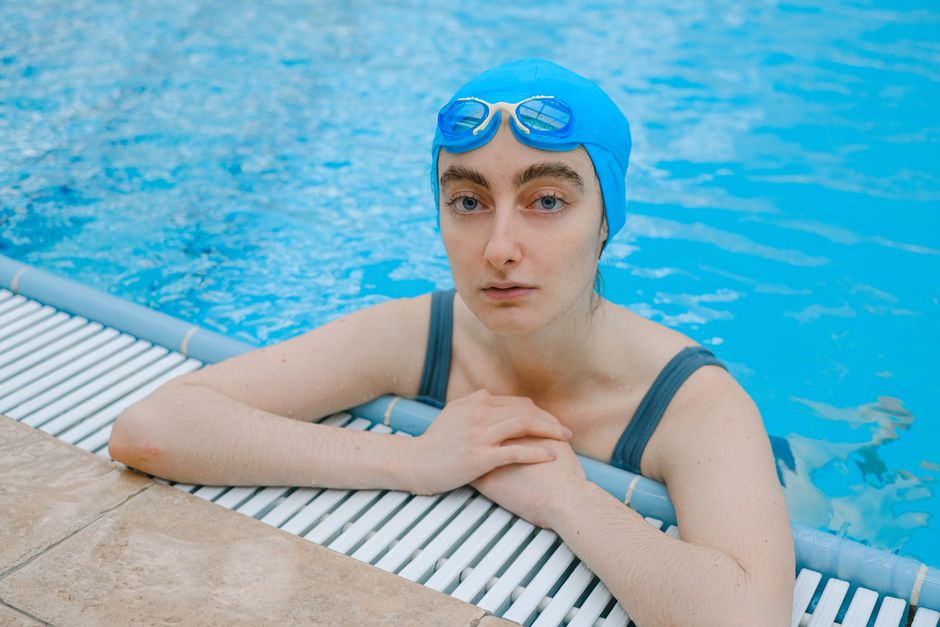
The most reliable routine is boring, quick and repeatable. It also prevents the mistake of treating every rough feeling as a reason to use a harsh clarifying shampoo.
Use this order
- Pre-wet the hair. Saturate it with clean tap water before entering the ocean or pool. Hair that already holds fresh water absorbs less of the surrounding saltwater or chlorinated water.
- Add a small amount of conditioner or leave-in. Apply from the mid-lengths to the ends. Keep heavy formulas away from the scalp if your roots become oily. The goal is slip, not a greasy coating.
- Cover or secure it. A swim cap gives the strongest pool protection. At the beach, a loose braid or low twist limits knots. Do not use a tight elastic on dripping-wet hair.
- Rinse immediately. Fresh water removes salt, chlorine and loose sand before they dry on the cuticle. A 30-second rinse is better than waiting until bedtime.
- Cleanse according to exposure. Use a mild shampoo after normal beach or pool time. Reserve a chelating or swimmer-specific wash for repeated pool use, mineral buildup or a greenish cast. Follow with conditioner every time.
Three mistakes that make summer hair worse
- Brushing from the roots through a knot pulls the knot tighter and increases breakage.
- Using a strong clarifying shampoo after every swim can leave already-dry hair rougher.
- Applying oil alone before intense sun can make hair feel coated without providing dependable UV coverage.
Skip heat styling on the same day as a long swim when possible. Let the hair air-dry partly, then use a low heat setting if you need a finished style. If ends remain rough after two or three weeks of careful care, trim them. No conditioner permanently seals a split end.
Verdict: Pre-wet, condition, cover, rinse and wash based on exposure. That sequence does more than adding a fifth styling product.
Summer hair care questions buyers still ask

Does wetting hair before swimming really help?
Yes, but it does not create a complete shield. Saturated hair has less room to take in pool water or saltwater, so pre-wetting can reduce exposure at the surface. It works best when paired with a cap, conditioner and a quick fresh-water rinse. Skipping the rinse leaves the same chemicals sitting on the hair as the water evaporates.
Can I use regular conditioner as a pre-swim treatment?
For many people, a small amount on the lengths is a sensible low-cost option. Fine hair may look flat, and oily scalps may feel dirty, so keep it away from the roots. Do not use a heavy mask before swimming if you plan to spend hours in direct sun; a sticky coating can collect sand and create more friction during detangling.
Should I wash my hair after every pool visit?
After chlorine exposure, rinse immediately and shampoo when the hair feels coated, smells strongly of chlorine or has visible buildup. A mild wash may be enough for an occasional swim. Frequent swimmers can alternate gentle cleansing with a swimmer-specific or chelating wash, then condition the mid-lengths and ends. Washing aggressively every day can trade mineral buildup for dryness.
The best summer hair care choice is simple: block strong sun with a hat, pre-wet and condition before swimming, then rinse and cleanse before salt or chlorine dries on the hair.