
Why Long Flights Are Tough on Your Skin
Have you ever noticed your skin feeling dry, dull, or puffy after a long flight? That’s because flying puts your skin through a lot. One of the biggest culprits is low cabin humidity—typically around 10-20%—which is much drier than what your skin is used to. This harsh dryness sucks moisture right from your skin, leading to dehydration, tightness, and irritation.
Add to that the pressurized airplane environment. Reduced oxygen flow slows down your skin’s ability to repair itself, causing dullness and puffiness around the eyes and cheeks. Plus, if you’re sitting by the window, you get extra exposure to UV rays at high altitudes—even though you’re thousands of feet in the air. This hidden sun exposure can accelerate skin aging and increase sensitivity.
On top of it all, the recycled air inside the cabin, combined with stress and poor sleep quality, can aggravate inflammation and worsen skin problems like acne or redness. All these factors together make your skin vulnerable and stressed during long haul flights. Understanding these challenges is the first step to keeping your skin healthy in the air.
Pre-Flight Preparation: Build a Strong Foundation (24-48 Hours Before)
Preparing your skin before a long flight is key to minimizing dryness and dullness while flying. Start by hydrating internally—drink plenty of water and cut back on caffeine and alcohol, as these can dehydrate you further.
As part of your pre-flight skincare prep, keep things simple and gentle. Use a mild cleanser to remove impurities without stripping your skin. Follow with a hydrating serum rich in hyaluronic acid, which helps lock in moisture, and apply a rich moisturizer with ceramides to strengthen your skin’s barrier. These ingredients are essential for protecting your skin against the harsh, dry cabin air.
Avoid any harsh treatments like exfoliation or retinoids within 48 hours of your flight, as they can make your skin more sensitive to irritation during the trip. Finally, pack your skincare essentials in TSA-compliant travel-sized containers, and keep them organized in a clear bag for easy access through security.
This simple, focused routine lays the groundwork for healthy skin and helps you maintain hydration throughout the long haul. For a seamless travel experience, make sure your packed skincare gear is travel-friendly and efficient, similar to selecting the right handbag for long trips that fits all your essentials in one place.
In-Flight Skincare Routine: Maintain Hydration at 30,000 Feet
Keeping your skin hydrated while flying is crucial to combat cabin air dehydration and maintain a fresh complexion throughout the flight. Start your boarding ritual by gently removing makeup with micellar water, then layer on a hydrating toner or essence to prep your skin. Every 2 to 4 hours, refresh your face by spritzing a hydrating face mist airplane travelers swear by, followed by reapplying your hyaluronic acid serum and a rich moisturizer or barrier-repair cream to lock in moisture.
For longer flights, consider an intensive boost like a soothing sheet mask or an overnight-style cream if you feel comfortable, which can fight dullness and dryness. Don’t forget to care for targeted areas—use lip balm to prevent chapping, hand cream to combat dryness from constant hand sanitizer use, and eye patches or cream to reduce puffiness and dark circles.
If you’re seated by the window or flying during daylight, reapplying broad-spectrum SPF is a must to protect against increased UV exposure at altitude. Lastly, keep hands clean and avoid touching your face as much as possible to reduce irritation and breakouts; carry a sanitizer and use it regularly. For more on gentle cleansing and hydration techniques, you might find this guide on my morning skincare ritual helpful.
Additional In-Flight Habits for Better Skin
Keeping your skin healthy on a long flight goes beyond just applying products. Here are some easy habits to follow:
- Hydrate consistently: Aim to drink about 8 oz of water every hour to combat cabin air dehydration. Avoid alcohol and caffeine as they can dry your skin out even more.
- Keep moving: Whenever you can, take a quick walk up and down the aisle. This boosts circulation and helps reduce puffiness—especially around your eyes and face.
- Sleep smart: Use a neck pillow and eye mask to improve sleep quality. Before napping, apply an occlusive balm to lock in moisture and protect your skin.
- Avoid common mistakes: Skip heavy makeup during the flight as it clogs pores and makes dryness worse. Also, avoid washing your face with plane bathroom water, which can be harsh and irritating.
These simple tips complement your airplane skincare routine and help maintain hydration and skin health throughout your journey.
Post-Flight Recovery: Refresh and Repair Upon Landing
After a long flight, your skin needs some serious TLC to bounce back from cabin air dehydration and stress. Start with a gentle cleanse to remove the buildup of dirt, oil, and dry skin. If your skin feels congested or tired, following up with a purifying mask can help clear pores and refresh your complexion.
Next, focus on deep hydration. Layer a hyaluronic acid serum, a rich moisturizer, and a nourishing facial oil to lock in moisture and restore your skin’s barrier. This combo helps combat dullness and tightness caused by low cabin humidity.
Don’t forget to address any specific skin issues caused by the flight—soothe irritation with calming ingredients, treat any breakouts quickly, and brighten dull skin with targeted serums or creams. Finally, adapt your routine to your destination’s climate and humidity to keep your skin balanced and healthy.
For more tips on adjusting your skincare to different environments, check out my travel guides like my favourite city breaks which cover climates that might impact your skin post-flight.
Must-Have Travel-Sized Skincare Essentials
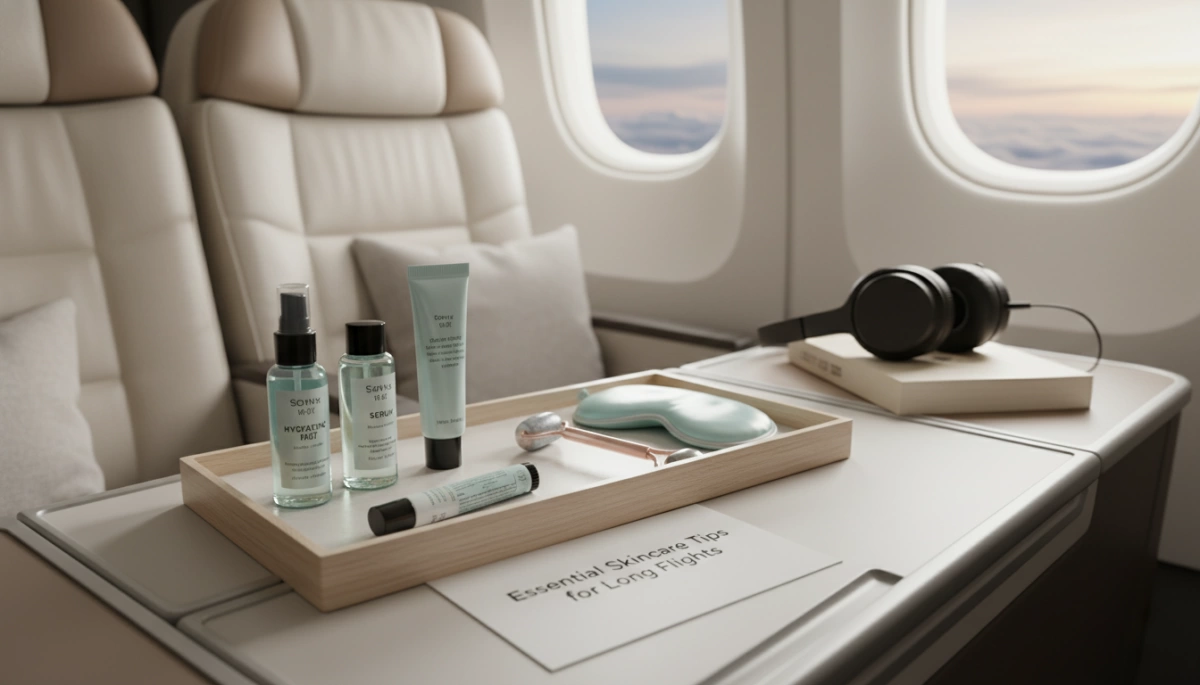
Keeping your skincare routine simple but effective on long flights means packing the right travel-sized essentials. Here’s what you should always have on hand for in-flight hydration and skin protection:
- Facial mist or thermal water: A quick spritz refreshes your skin and helps combat cabin air dehydration throughout the flight.
- Hyaluronic acid serum: Lightweight yet powerful, this hydrates deeply, locking in moisture when the air is at its driest.
- Rich, barrier-supporting moisturizer or balm: Choose one with ceramides or nourishing oils to repair and strengthen your skin barrier mid-flight.
- Lip balm and hand cream: These areas dry out fast in the pressurized cabin, so keep them protected with rich, emollient formulas.
- Sheet masks or eye patches: Perfect for longer haul flights, they provide an intensive hydration boost and combat puffiness or dullness.
- Broad-spectrum SPF: Even at high altitudes, UV exposure can damage your skin, especially if you’re seated by a window — reapply sunscreen as needed.
- Micellar water wipes: Handy for removing makeup and cleansing without water, helping you maintain a fresh complexion without the plane’s dry tap water.
For a comprehensive approach to travel skincare and all your beauty basics, check out these skincare staples that transform your routine to ensure you’re fully prepped before takeoff.
Common Mistakes to Avoid on Long Flights
Long flights put your skin through a lot, but some simple errors can make it worse. Here are the most common skincare mistakes to avoid when flying:
- Over-cleansing or using plane sink water: Airport and airplane bathroom sinks often have hard or chlorinated water that can strip your skin of moisture or cause irritation. Stick to micellar water wipes or a gentle cleanser you’ve packed, and avoid washing your face with tap water on the plane.
- Skipping internal hydration: Drinking water is the best way to fight cabin air dehydration. Skipping hydration can lead to dry, dull skin or even exacerbate puffiness and inflammation mid-flight.
- Wearing full makeup: Heavy makeup blocks pores and traps impurities during a flight, increasing the chance of breakouts or irritation. Keep it light or go makeup-free to allow your skin to breathe.
- Ignoring neck, hands, and lips: Often forgotten, these areas suffer from dry cabin air and UV exposure too. Don’t forget to apply moisturizer on your neck, hand cream regularly, and a nourishing airplane lip balm to prevent cracking or flaking.
Being mindful of these points will keep your skin calmer and more hydrated throughout long haul flight beauty essentials. For more on managing makeup and skincare choices, check out this guide on the makeup products I won’t board with.
Avoid these pitfalls, and your skin will thank you after even the longest flight.