
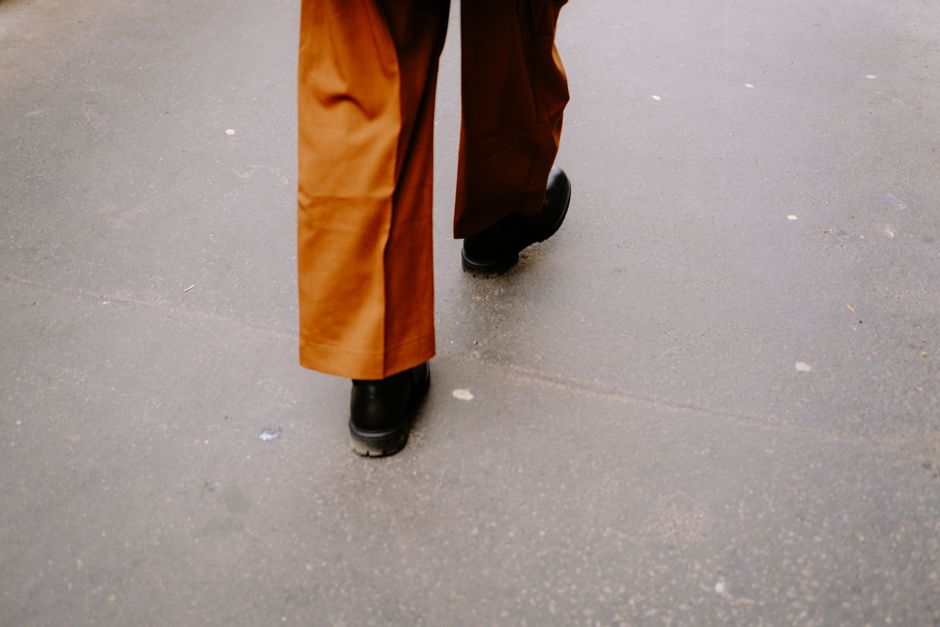
In 2018, a survey by the market research firm NPD Group found that 42% of women owned at least three pairs of black jeans. By 2026, that number had climbed to 61%. The reason isn’t a trend cycle. Black denim solves a structural problem: most people own clothes that don’t coordinate with each other. Black jeans act as a neutral anchor that works with virtually every color, texture, and silhouette in a closet.
This article explains exactly why that matters, how to pick the right pair, and the mistakes that make black jeans fail. No affiliate links. No brand fluff. Just what works.
What Black Jeans Do That Blue Jeans Cannot
Blue jeans read as casual. Even a dark indigo wash signals weekend, errand, or relaxed Friday. Black jeans occupy a middle ground. They can dress down a silk blouse or dress up a cotton t-shirt. The visual weight of black creates a cleaner line from waist to ankle, which makes outfits appear more intentional.
Consider a basic outfit: white t-shirt, black jeans, black ankle boots. Swap the black jeans for blue jeans and the same outfit reads as “running errands.” With black jeans, it reads as “going out.” That perceptual shift matters when you own fewer pieces and need each one to pull double duty.
The Color Coordination Advantage
Black pairs with every color in the visible spectrum. White, cream, gray, navy, olive, burgundy, mustard, pink, red. No color clash. No worrying about whether the blue of your jeans matches the blue in your sweater. Black is a universal acceptor. That means you can buy a top in any color without wondering if it will work with your pants.
The Silhouette Factor
Black absorbs light. That makes it visually slimming, but more importantly, it creates a continuous vertical line. A black jean with a black boot or sneaker extends the leg visually. This is useful for petites (under 5’4″) and anyone who wants a longer line through the torso. The effect is subtle but real.
How to Pick the Right Black Jean (Fit, Fabric, Finish)

Not all black jeans are equal. The wrong pair fades unevenly, stretches out after three wears, or looks cheap under direct light. Here are the three specifications that matter most.
| Spec | What to Look For | Why It Matters |
|---|---|---|
| Fabric weight | 10–12 oz denim | Heavier denim holds shape and resists bagging at the knees |
| Stretch percentage | 1–2% elastane | Too much stretch (5%+) causes sagging after 4 hours of wear |
| Dye quality | Sulfur-dyed or rope-dyed | Cheap direct dyes fade to gray-green after 10 washes |
Fit Types That Work for Most Bodies
Straight leg (Levi’s 501 in black, $98) is the most versatile. It works with sneakers, loafers, and boots. Slim straight (Uniqlo Slim Straight, $49.90) is a close second for people who want less fabric without going skinny. Avoid super-skinny black jeans unless you plan to tuck them into boots. The tight ankle creates a visual disconnect with most flat shoes.
Finish: Matte vs. Coated
Matte black denim looks more expensive and ages better. Coated (shiny) black denim cracks at the knees and hips after 15–20 wears. The finish flakes off and cannot be restored. Stick to matte. If you want texture, look for a black slub denim — the irregular weave gives visual interest without the cracking problem.
The Three Outfits That Prove the System Works
You do not need a full closet audit to test this. Try these three outfits. If they work, the concept works for your body and lifestyle.
- Office-adjacent: Black jeans + white button-up (Everlane Oxford, $88) + black leather loafer (GH Bass Weejuns, $110). Add a navy blazer if needed.
- Weekend: Black jeans + cream cashmere crewneck (Uniqlo, $79.90) + white leather sneaker (Veja Campo, $155).
- Evening: Black jeans + black silk camisole (Quince, $49.90) + black pointed-toe boot (Sam Edelman, $130).
Each outfit uses the same pair of jeans. The tops and shoes change. That is the core efficiency. You own one bottom that works for three distinct dress codes.
When Black Jeans Fail — and How to Prevent It

Black jeans have three common failure modes. Here they are, with specific fixes.
Failure 1: Fading to Gray
This happens because cheap direct dyes are not chemically bonded to the cotton fibers. After 5–10 machine washes, the black shifts to a charcoal gray with green undertones. Prevention: Buy sulfur-dyed or rope-dyed denim. Brands like AG Jeans ($225) and Madewell ($128) use sulfur dyes that hold color for 50+ washes. Wash inside out in cold water. Never use fabric softener — it strips dye.
Failure 2: Bagging at the Knees and Seat
Excessive elastane (4% or more) causes the denim to lose its recovery. After a full day of wear, the knees bulge and the seat sags. Prevention: Look for 1–2% elastane maximum. If you need more mobility, buy a stretch denim with mechanical stretch — the weave itself stretches, not the added spandex. Levi’s 721 High-Rise Skinny ($69.50) uses this construction.
Failure 3: Pilling Between the Thighs
Thigh chafing creates pilling and eventual holes. This is a fabric density issue. Prevention: Choose a twill weave with at least 11 oz weight. The tighter the weave, the more abrasion resistance. Brands like Nudie Jeans ($200) offer a repair program — they fix thigh holes for free regardless of where you bought the jeans.
The Alternative Argument: Why You Might Not Need Black Jeans
Black jeans are not a universal solution. Here is when you should skip them.
- You live in a hot climate year-round. Black absorbs heat. In direct sun, black denim can be 10–15°F warmer than light-wash denim. Cotton-linen blends or light gray jeans are better choices.
- You own cats with light-colored fur. Black denim shows every hair. If lint-rolling is not a habit you want, stick to mid-wash blue or olive.
- Your wardrobe is already 80% black. You may benefit from a contrast piece — cream trousers, dark green cords, or a mid-wash denim — to add visual separation between tops and bottoms.
If none of those apply, a single pair of well-constructed black jeans will simplify getting dressed more than any other single garment. The key is buying the right one.
One Pair, Three Years, No Regrets

I own one pair of black jeans. A straight-leg, 11 oz, sulfur-dyed pair from Everlane ($98). I have worn them roughly 200 times over three years. They have been machine-washed about 40 times. They are still black. The knees do not bag. The thighs have no holes. They work with every single top I own, which is about 15 pieces.
That is the entire argument. You do not need a dozen black jeans. You need one that fits, holds its color, and works with what you already own. Everything else is optional.