The US plus-size apparel market topped $32 billion in 2026. Despite that scale, a Google search for “old money aesthetic” returns page after page of advice built around straight-size silhouettes — slim-cut trousers, tucked blouses, narrow proportions. If you wear a size 16 or above, most of that content doesn’t just fail to help. It actively misleads.
Old money style translates to plus-size bodies well. But only when you understand what the aesthetic is actually built on: fabric quality, color restraint, fit precision, and deliberate simplicity. None of those principles require a particular body type. What they require is knowing where to shop, what to skip, and how to adapt silhouettes that were historically designed for a narrower range of bodies.
The Aesthetic Has Nothing to Do With Body Size
The old money look is built on restraint, not silhouette. That distinction matters because it means the foundational principles are size-neutral.
What makes a woman look “old money” is not how her clothes hang — it’s what her clothes communicate. No visible branding. No trend-forward details. Nothing competing for attention. The wardrobe signals confidence through understatement, not through any particular body proportion.
This aesthetic originated with East Coast prep culture and European aristocracy — women who wore the same cashmere twinset for three decades because they could afford to ignore trends. Their wardrobes communicated permanence. Not fashion-forwardness, not body display — permanence.
For plus-size women, this is actually a structural advantage. The body-conscious, trend-driven aesthetic that dominates fast fashion is harder to translate into old money because it relies on showing off newness and a specific kind of fit. Quiet luxury, by contrast, rewards drape, structure, and quality fabric — categories that benefit from curves rather than work against them.
A well-draped wide-leg trouser in heavy ponte wool looks exponentially more expensive on a curvy body than on a straight one. A cashmere crewneck worn relaxed reads as effortless at any size. The pieces that define this aesthetic — blazers, straight trousers, silk blouses, loafers — were never meant to minimize a body. They were meant to dress one.
The one thing that kills the look at any size: visible effort. Over-accessorizing, silhouettes that are either too tight or too shapeless, polyester that catches light wrong. The goal is looking like you dressed in five minutes and still outclass everyone else in the room.
The Fabrics That Separate the Aesthetic From a Costume
Old money dressing is mostly a fabric story. The gap between a $45 blazer and a $450 one is typically not the cut — it’s the weight, drape, and surface texture of the material. Get the fabric right and the outfit works. Get it wrong and no amount of correct silhouette rescues it.
Wool and wool blends are the foundation. A ponte wool trouser from Eloquii — their Stretch Ponte Straight-Leg Trouser runs $89, sizes 14-28 — falls differently than any polyester look-alike. The weight prevents clinging, the drape creates clean vertical lines, and the fabric doesn’t crease after two hours of sitting. For blazers, look for at least 60% wool content on the label.
Cashmere is expensive and worth it. One Ralph Lauren Plus cashmere crewneck, available in sizes 1X-3X for around $298, does more for an old money wardrobe than five synthetic sweaters combined. Cashmere absorbs light rather than reflecting it — which is the entire visual difference between looking wealthy and looking like you’re trying to look wealthy.
Cotton Oxford cloth for button-downs. Not jersey, not stretch poplin. The structured weave holds its shape without effort and reads as confident casualness. J.Crew+ carries Oxford cloth shirts in sizes up to 28 ($79-$89). It requires no ironing to look intentional. That’s a feature.
Linen works in warm months. It wrinkles. That’s the point. Old money women don’t over-press their clothes — the natural texture of worn linen reads as relaxed confidence, not carelessness. Eileen Fisher, which carries up to 3X in most styles, builds a significant portion of its line around natural linen and organic cotton.
| Fabric | Old Money Rating | Best Use | Note |
|---|---|---|---|
| Cashmere | Essential | Sweaters, cardigans | One good piece beats five mediocre ones |
| Merino wool | High | Trousers, blazers, turtlenecks | Many are machine-washable — check the label |
| Cotton Oxford | High | Button-downs, shirts | Avoid stretch versions — structure is the point |
| Linen | High (seasonal) | Summer dresses, wide-leg trousers | Wrinkling is expected and acceptable |
| Ponte knit | Good | Trousers, blazers | Quality varies widely — buy from established brands only |
| Polyester satin | Avoid | — | Looks expensive in photos, cheap in person |
| Scuba fabric | Avoid | — | Pulls and shines under any lighting condition |
Which Brands Actually Stock Old Money Pieces in Extended Sizes
This is where most styling guides fail plus-size women — they recommend brands that stop at a size 14. The landscape has improved, but you still need to know where to look.
| Brand | Size Range | Price Range | Best Category |
|---|---|---|---|
| Universal Standard | 00–40 | $$–$$$ | Blazers, trousers, turtlenecks — Geneva Blazer ($195) is the standout |
| Eloquii | 14–32 | $$ | Ponte trousers, structured dresses, work separates |
| Ralph Lauren Plus | 1X–3X | $$$ | Cashmere knitwear, polo shirts, classic blazers |
| Talbots | 0X–3X | $$ | Wool trousers, classic blazers, Heritage Tweed styles |
| Eileen Fisher | XS–3X | $$$ | Linen separates, organic cotton, relaxed tailoring |
| J.Crew+ | 14–28 | $$ | Oxford shirts, chinos, straight-leg jeans, blazers |
| Ann Taylor | 14W–26W | $$ | Classic dresses, workwear separates, cardigans |
| Lafayette 148 | 0–24 | $$$$ | Investment suits, structured outerwear, silk blouses |
Universal Standard is the clearest answer for women who want this aesthetic without size compromise. The Geneva Blazer ($195) maintains its structure through repeated wearing and holds its shape like a more expensive garment. Their sizing genuinely runs 00 to 40 — not 00 to 20 with a token 22 added later.
For trousers under $100, Eloquii’s Ponte Straight-Leg Trouser ($89) is the benchmark. The fabric weight prevents the shapeless silhouette that cheap ponte typically creates, and the straight leg reads as intentional without requiring heels to work.
Lafayette 148 is the investment tier. Their suits run $600-$1,200 and carry to size 24. For one truly excellent suit — the kind that reads as quietly authoritative at first glance — this is where to look. Everything else on the list is a path toward building that level over time.
Five Pieces That Form the Foundation
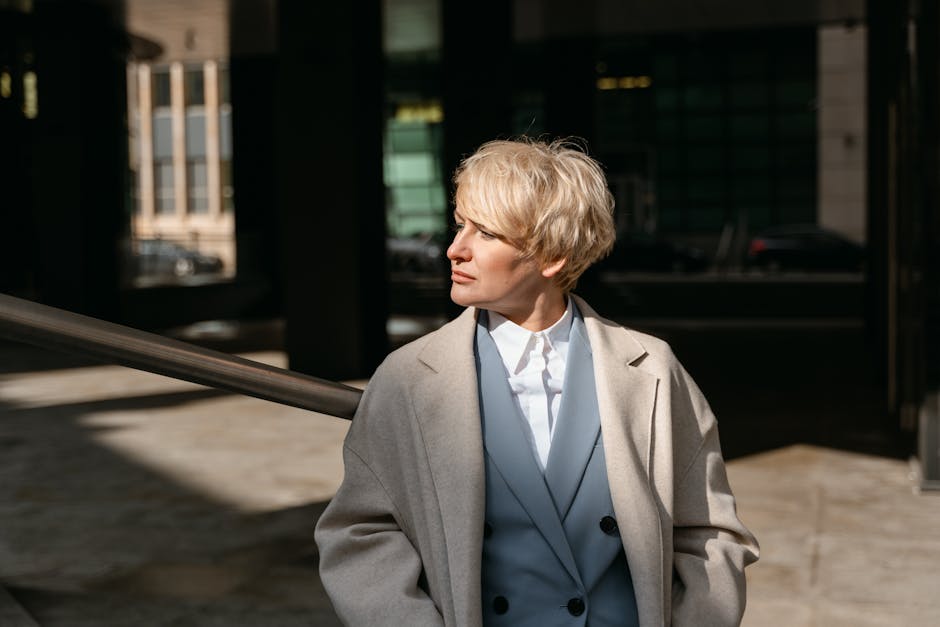
- A structured blazer in navy, camel, or ivory. Not black — old money dressing tends toward navy over black, camel over gray. The Universal Standard Geneva Blazer ($195) or a Talbots Heritage Tweed Blazer ($179, sizes 0X-3X) both hold structure without stiffness. Wear either over a white Oxford shirt and 70% of the aesthetic is already there.
- A cashmere or merino crewneck or turtleneck. One. Bought carefully. Ralph Lauren Plus cashmere crewneck (~$298, sizes 1X-3X) is the benchmark. If the budget doesn’t stretch there, Charter Club’s merino crewneck at Macy’s (~$89 on frequent sale) wears significantly better than its price suggests.
- Straight-leg or wide-leg trousers in wool or ponte. Not skinny jeans. Old money silhouettes run straight — tailored through the hip, straight or slightly wide through the leg. Eloquii’s Ponte Trouser or J.Crew+ Slim Wide-Leg Pant ($99, sizes 14-28) both work without requiring a specific shoe height to balance the proportions.
- A simple leather handbag without visible logos. Old money does not carry logo-covered bags. A Coach Pillow Tabby ($395) or a 1990s-era vintage Coach bag from ThredUp or Poshmark ($40-$120) both read correctly. The Polène Numéro Un Mini ($245) is another strong option — minimal French design, clean hardware, available in neutral colorways. Nothing with LV monogram. That’s a different aesthetic entirely.
- A silk or high-quality cotton blouse in a solid neutral. White, ivory, light blue, or soft blush. Pick two and buy one each. Talbots carries several under $89. Wear tucked into the straight-leg trousers or under the blazer. This combination works for a brunch and a board meeting without adjustment.
These five pieces generate more than 20 distinct outfits. That’s the point — old money dressing is about owning less that works harder, not accumulating more that only works once.
The Mistake That Undermines Everything Else
Buying oversized to hide the body is the single move that collapses this aesthetic fastest for plus-size women. Shapeless clothes don’t read as relaxed wealth — they read as clothes that don’t fit. Old money style requires proportion: not tight, not draped-to-obscure, but intentionally fitted. That skill is worth developing before spending money on anything else in this list.
Buying Guide: The Questions Worth Asking First
Does the old money color palette work for deeper skin tones?
Yes — and in several cases, better than it works for lighter complexions. The core palette runs to ivory, camel, navy, hunter green, burgundy, and cream. These colors typically photograph more sharply and wear more powerfully against medium and deep complexions. Ivory, in particular, tends to wash out very fair skin while it reads crisply against deeper tones. Camel and burgundy are broadly flattering across a wide range of undertones.
The one case to reconsider: very pale blush or soft gray can disappear against lighter skin. Swap to ivory or cream — they carry enough warmth to register without washing out.
Can this aesthetic be done on a limited budget?
Partially — and the most effective workaround is the secondhand market. Talbots wool blazers, vintage Ralph Lauren knitwear, and classic Brooks Brothers pieces appear regularly on ThredUp, Poshmark, and in Goodwill stores, particularly in suburban locations. A genuine cashmere twinset purchased secondhand for $25 outperforms a new polyester version at $50 by a visible margin in every setting.
The approximate threshold where this aesthetic starts working from new purchases: $300-$400 for two or three quality anchor pieces. Below that budget, lean heavily on the secondhand market for fabric quality and buy accessories new.
Which shoes complete the look without requiring a heel?
Loafers. Specifically horsebit-style loafers or classic penny loafers in genuine leather. Sam Edelman’s Loraine Loafer ($100-$120, available in wide widths) is the practical entry-level answer. Naturalizer makes a pointed-toe loafer in wide and extra-wide widths for around $110. Both read as intentional without adding height.
Low block heels work. Leather ballet flats work. Platform sneakers, statement boots, and high stilettos belong to different aesthetic categories and pull the overall look away from old money regardless of how well the rest of the outfit is put together.
What jewelry fits this aesthetic?
Pearl studs. Gold hoops under one inch in diameter. A simple 16-18 inch chain necklace. A clean-faced watch in gold or silver — a secondhand Seiko or a Tissot ($200-$350 new) sits at exactly the right register. Nothing oversized, nothing that makes noise when you move, nothing that looks like it came from a theme park gift shop. Kendra Scott’s simpler pieces work. Pandora charm bracelets do not.
| Old Money Done Right | Common Mistake |
|---|---|
| Navy or camel blazer in wool blend | All-black polyester blazer |
| Straight-leg or wide-leg trousers | Skinny jeans as the default bottom |
| One cashmere sweater bought carefully | Five synthetic knitwear pieces from fast fashion |
| Clean leather bag with no visible logos | Monogram-covered or heavily branded accessories |
| Leather loafers or low block heels | Platform sneakers or statement boots |
| Clothes that fit with precision — not tight, not shapeless | Oversized everything worn to conceal the body |
| Secondhand quality fabric over new synthetic | Budget pieces that approximate the look without the foundation |