

I spent 47 minutes deciding what to wear yesterday. Not a joke — I tracked it. Between trying on three blazers that didn’t match, digging for the one pair of pants that still had a dry-cleaning tag on, and changing shoes twice, my morning was gone before 8:15 AM. That was six months ago. Today, I have exactly 20 items in my work wardrobe, and my morning decision time is under 90 seconds.
Why 20 Items? The Math Behind Fewer Choices
The average woman owns 103 pieces of clothing but regularly wears 20-30% of them. That’s 70-80 items taking up space and mental energy. The problem isn’t having too little — it’s having too much that doesn’t work together.
Decision fatigue is real. Every choice you make in the morning drains willpower you need for actual work. When I cut my wardrobe to 20 pieces, I eliminated 85% of my morning decisions. The result: I’m dressed and out the door in 8 minutes flat.
The 20-Item Formula
My exact breakdown: 5 tops, 4 bottoms, 3 blazers/jackets, 3 dresses, 3 pairs of shoes, 2 bags. That’s it. But here’s the trick — every single piece coordinates with at least 5 others. A cream silk blouse works with black trousers, navy trousers, the midi skirt, under the gray blazer, and alone with jeans on casual Fridays.
What You Actually Gain
Time is the obvious win. But the real benefit? Zero anxiety. No “does this make me look like I tried too hard?” No “can I get away with these pants again?” Every outfit looks intentional because every piece was chosen to fit together.
The 3 Mistakes People Make When Starting a Capsule
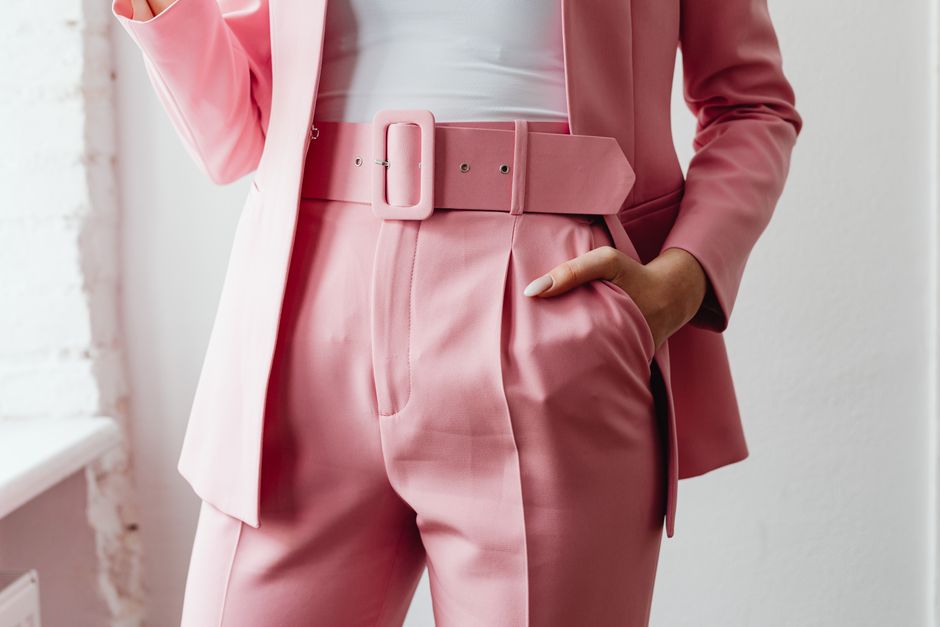
I made all of them. You don’t have to.
Mistake #1: Buying everything at once. I dropped $1,200 at Everlane in one afternoon. Ended up returning half because the fit was wrong. Build slowly — one piece per week, testing each against what you already own.
Mistake #2: Ignoring your actual lifestyle. A capsule built for “creative director at a fashion brand” won’t work if you’re a software engineer who meets clients twice a month. Be honest about how many days you actually wear suits vs. jeans.
Mistake #3: Buying cheap to save money. A $30 polyester blouse pills after three washes. A $98 Uniqlo cotton button-down lasts two years. The math isn’t even close.
My Exact 20-Item List (With Brands and Prices)
Here’s what made the cut after six months of testing. Every item has been worn at least 10 times.
| Category | Item | Brand | Price | Wears/Month |
|---|---|---|---|---|
| Tops | Cream silk blouse | Everlane | $98 | 6 |
| Tops | White cotton button-down | Uniqlo | $40 | 5 |
| Tops | Navy cashmere crewneck | Quince | $80 | 4 |
| Tops | Black mock-neck top | Aritzia | $55 | 7 |
| Tops | Striped Breton tee | Saint James | $95 | 3 |
| Bottoms | Black wide-leg trousers | Theory | $225 | 8 |
| Bottoms | Navy straight-leg pants | Banana Republic | $120 | 6 |
| Bottoms | Cream midi skirt | Reformation | $168 | 4 |
| Bottoms | Dark wash jeans | Madewell | $130 | 5 |
| Blazers | Gray wool blazer | J.Crew | $198 | 7 |
| Blazers | Black unstructured blazer | Aritzia | $165 | 5 |
| Blazers | Tan trench coat | London Fog | $250 | 4 |
| Dresses | Black sheath dress | Theory | $280 | 3 |
| Dresses | Navy wrap dress | Diane von Furstenberg | $350 | 2 |
| Dresses | Striped shirt dress | Everlane | $110 | 3 |
| Shoes | Black leather loafers | G.H. Bass | $120 | 10 |
| Shoes | Nude block-heel pumps | Sam Edelman | $110 | 4 |
| Shoes | White leather sneakers | Veja | $150 | 6 |
| Bags | Black leather tote | Cuyana | $248 | 12 |
| Bags | Crossbody bag | Madewell | $98 | 8 |
Total investment: $2,940. Cost per wear after one year (assuming 200 work days, 2-3 items per outfit): roughly $5 per wear. Compare that to a $50 fast-fashion top you wear twice.
When a 20-Item Wardrobe Won’t Work (And What to Do Instead)

Let me be clear: this system isn’t for everyone.
If your job requires 5 different dress codes per week (client meetings, factory floors, black-tie events, casual Fridays, and presentations), 20 pieces won’t cut it. You need a 30-40 item system with dedicated clusters for each dress code.
If you live somewhere with 4 distinct seasons, your wardrobe needs rotation. My 20 items work for spring and fall. Summer swaps in linen pants and sleeveless blouses. Winter adds a heavier coat and boots. The core pieces stay, but about 5 items rotate per season.
And if you genuinely enjoy fashion as a creative outlet? Don’t do this. This system is for people who see clothes as tools, not toys. If dressing up brings you joy, keep your 100-piece closet. Just know it costs you time.
How to Build Your Own 20-Item Work Wardrobe in 4 Weeks
Don’t do what I did — don’t purge everything on a Sunday and panic-buy replacements. Here’s a slower, smarter plan.
Week 1: Audit. Pull everything you wore in the last 30 days. Lay it out. These are your real work clothes, not your aspirational ones. Count them. Take photos of your favorite 5 outfits.
Week 2: Identify gaps. Look at those 5 favorite outfits. What’s missing? For me, it was a cream blouse that worked with everything. For you, it might be a versatile blazer or comfortable flats that don’t look frumpy.
Week 3: Buy intentionally. One piece at a time. Try it with 3 existing items before you commit. If it only works with one outfit, it doesn’t belong.
Week 4: Test and adjust. Wear your 20-piece system for 2 weeks. Track what you miss. If you reach for a piece 3 times and it doesn’t work, swap it. The goal isn’t perfection — it’s a system that actually saves you time.
The Real Cost of Not Doing This

Let’s do the math I wish someone had shown me.
Average American woman spends 17 minutes per day choosing outfits. That’s 103 hours per year — over 4 full days. At a $50/hour consulting rate (or your own hourly wage), that’s $5,150 of time spent deciding what to wear.
My 20-item wardrobe costs $2,940 and saves me 15 minutes per day. That’s 91 hours per year. At the same $50/hour, I’m saving $4,550 worth of time annually. The wardrobe pays for itself in 8 months.
Time is the only resource you can’t buy more of. A curated wardrobe buys it back.
Final Verdict: Is 20 Items Enough?
For most office workers, yes — with one caveat. You need to be ruthless about quality and fit. A $40 Uniqlo shirt that fits perfectly beats a $200 designer blouse that needs alterations. Fit is the only thing that matters.
My morning anxiety is gone. I don’t stand in front of my closet anymore. I open the door, grab the first combination that comes to mind, and I’m dressed in 90 seconds. The gray blazer, cream blouse, black trousers, loafers — that’s my Monday uniform. Tuesday: the navy wrap dress with the block heels. Wednesday: Breton tee, jeans, tan trench.
I have 20 pieces and 20+ outfit combinations that all look like I planned them. Because I did — once, six months ago. Now I don’t think about clothes until I’m at my desk, already working.