
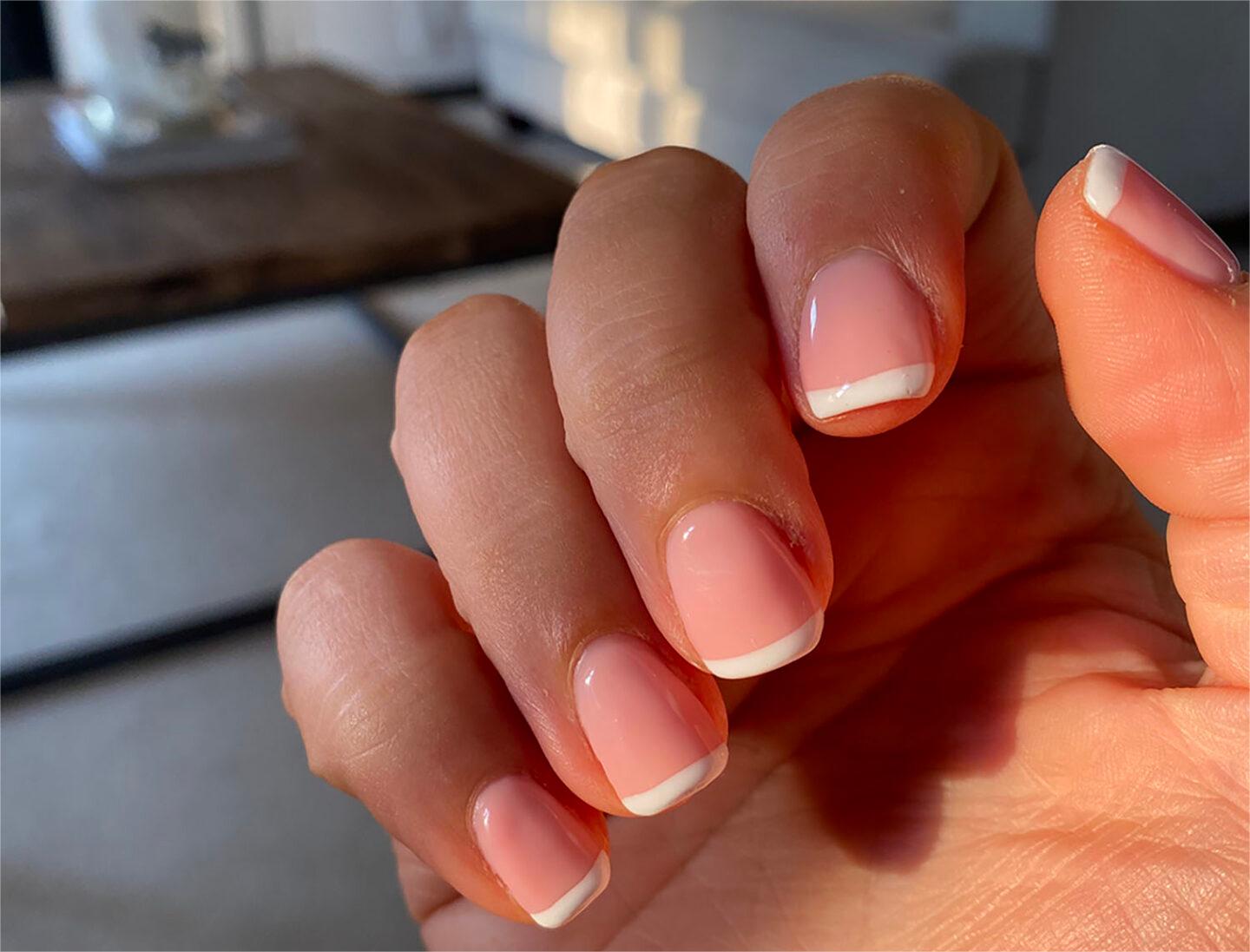
Are you tired of spending 30 minutes painting your nails, only to see chips before the week is up? You’re probably not using the wrong polish. You’re skipping steps.
A salon manicure holds because technicians follow a precise sequence and use products that were designed to work together. Both of those things are fully replicable at home. Here’s exactly what to buy, what to do, and what to stop doing.
The 8 Tools You Actually Need Before You Start
You can’t get lasting results with just a bottle of color. These eight items are what separate a manicure that holds five days from one that chips by Thursday:
- Nail file (180/240 grit): The Deborah Lippmann Smooth Operator 4-Way Nail Buffer ($18) handles both shaping and surface smoothing. For basic shaping alone, any drugstore 180-grit emery board does the job.
- Cuticle pusher: The Revlon Expert Cuticle Pusher & Trimmer ($6, available at Target) is the most reliable entry-level tool. Rubber-tipped pushers are gentler on the nail fold than metal ones.
- Cuticle oil: CND SolarOil ($12) is what most professional nail technicians use. Apply it every night before bed — not just during manicures — and cuticle texture improves within two weeks of daily use.
- Rubbing alcohol (70%+ isopropyl): Any generic drugstore version works. This removes natural oils from the nail plate before painting. Skipping this step is the single most common reason polish peels in under three days.
- Base coat: OPI Nail Envy ($18) is the standard for weak or peeling nails. For normal nails, Orly Bonder Rubberized Base Coat ($12) grips color polish better than most products at this price.
- Color polish: Your choice — a full comparison of which ones actually hold at home is in section four below.
- Top coat: Seche Vite Dry Fast Top Coat ($10) dries faster and lasts longer than any other drugstore option on the market. It’s the one product most experienced home manicure enthusiasts refuse to swap out.
- Cleanup brush or pen: A thin nail art brush dipped in acetone, or the Manicare Nail Art Cleanup Pen ($8), for removing polish from the skin around the nail.
What You Can Skip Entirely
UV lamps, LED kits, acrylic powders, gel systems — all of that is for a completely different category of service. If you want a regular polish manicure that holds 5–7 days, none of it is necessary. Don’t buy a 40-piece starter kit. Buy the eight items above, master the process first, and add equipment later only if you specifically want gel.
One Item Most People Forget to Buy
Cotton rounds, not cotton balls. Rounds don’t shed fibers onto the nail plate when you’re removing polish or wiping with alcohol. A pack of 100 costs about $3 and makes both prep and cleanup noticeably cleaner. It sounds minor. It isn’t.
The Step-by-Step Process — Exact Order Matters More Than Product
The sequence of these steps matters as much as the products you use. Most home manicures fail not because of cheap polish, but because steps get reversed or eliminated entirely. Follow this in order every time.
- Remove old polish completely. Use an acetone-based remover — non-acetone takes twice as long and leaves more residue. Saturate a cotton round, press flat on the nail for 10 full seconds, then wipe once downward. Don’t scrub back and forth.
- File your nails when dry. Wet nails are softer and more likely to split or peel during filing. File in one direction only, moving from the outer edge toward center. Pick your shape: square (requires consistent upkeep), oval (more forgiving), or squoval — square with gently rounded corners, the easiest to maintain at home.
- Soak and push cuticles. Soak fingers in warm water for 3–5 minutes, or press a warm damp towel against each hand for 2 minutes. Push cuticles back gently with a rubber-tipped pusher. Only remove loose dead tissue — called pterygium — which looks white and flaky at the nail base. Do not cut living skin. Cutting live cuticles causes them to grow back thicker and raises the risk of infection.
- Buff the nail surface lightly. Use the fine side of a buffer to smooth ridges. Three to four passes per nail is enough. Over-buffing thins the nail plate over time and makes nails weaker.
- Wash your hands. This removes filing debris that would otherwise get trapped under your base coat.
- Dehydrate with alcohol. Wipe each nail with a cotton round soaked in 70% isopropyl alcohol. Wait 30 full seconds before touching the nails. Natural oils on the nail surface actively prevent polish from bonding. Alcohol eliminates that problem.
- Apply base coat — one thin coat. Wait 2 minutes before the next step. If using OPI Nail Envy as a strengthener, apply two thin coats and wait 3 minutes total.
- Apply color in two thin coats. This is where most people go wrong. Load the brush with a small amount of polish — not a heavy glob — and use three strokes per nail: down the center, then the left side, then the right. Wait at least 2 minutes between coats. If the first coat looks too sheer and streaky, that’s correct. Thin is right. A thick coat looks fuller immediately but peels off as a complete sheet within days because the inner layers never fully cure.
- Apply top coat and wrap the tip. Brush Seche Vite across the nail surface, then drag the brush slightly under the free edge of the nail to cap it. This seals the tip and prevents wear at the edge, which is where chips almost always begin.
- Clean up edges. Dip a thin brush or cleanup pen in acetone and remove any polish that touched skin. Easier to do while the top coat is still slightly wet.
- Wait 10 minutes before using your hands. Nails feel dry but are still curing underneath. Avoid reaching into bags, handling keys, or washing dishes for at least 10 minutes after the top coat is applied.
How to Paint Your Non-Dominant Hand
Rest your dominant hand flat on a hard surface, palm facing up. Hold the brush completely still and rotate your finger into the brush — rather than moving the brush across a moving hand. The control difference is significant once you try it. Most people find the non-dominant hand improves quickly with this technique.
Top Coat Refresh on Day 3
Apply a thin coat of Seche Vite on day three and again on day five. This costs two minutes and adds 2–3 days of extra wear without repainting from scratch. It also brings back the shine that dulls after the first couple of days.
The Real Reason Your Polish Chips in Two Days
Thick coats. Almost always thick coats. When color goes on thick, the outer surface dries faster than the interior — creating internal tension that causes the entire layer to peel off cleanly. Apply thin, wait two full minutes, apply thin again. That single change fixes most premature chipping.
The other causes: not dehydrating with alcohol before base coat, skipping base coat entirely, and not capping the free edge with top coat. Fix all four of those habits — thin coats, alcohol prep, base coat, tip wrap — and most people gain an extra three to four days of wear immediately.
Nail Polish That Holds at Home vs. What to Skip
Polish formula matters. Some are specifically engineered for professional application — meaning they need a controlled, practiced hand to layer correctly. Others are built to forgive. Here’s a direct comparison of the most common options available at drugstores and beauty supply stores.
| Polish | Price | Avg. Wear (Home Use) | Formula Type | Best For |
|---|---|---|---|---|
| CND Vinylux Weekly Polish | $11 | 7+ days | Professional grade | Best overall wear; use with Vinylux Top Coat |
| OPI Infinite Shine | $13 | 6–8 days | 3-step gel-like system | Gel look and feel without a UV lamp |
| Zoya Natural Nail Polish | $10 | 5–7 days | 10-free, vegan formula | Sensitive nails; widest available shade range |
| Essie Gel Couture | $12 | 5–7 days | Gel finish, no lamp required | High-gloss finish without UV equipment |
| Sally Hansen Miracle Gel | $10 | 5–8 days | Two-step gel-inspired | Beginners wanting longer wear with minimal effort |
| Revlon ColorStay Gel Envy | $8 | 4–6 days | Gel-inspired standard | Budget entry point for trying gel-style results |
The Clear Winner for Home Use
CND Vinylux Weekly Polish ($11) is the pick. It’s what many professional nail techs reach for when they want a regular polish with maximum hold, and it performs consistently at home when applied in thin coats. Use it with the matching CND Vinylux Weekly Top Coat ($11) — both were formulated as a system. Mixed with other brands, wear time drops noticeably.
When OPI Infinite Shine Makes More Sense
OPI Infinite Shine ($13) uses a three-step system: Primer base, Infinite Shine color, and Gloss top coat. The gel-like finish and durability genuinely rival a lamp gel when all three steps are used together correctly. The limitation is exactly that — you need all three OPI Infinite Shine products. Substituting your own base or a different top coat significantly reduces wear time for this specific system.
Skip Fast-Dry Formula Polish
Polishes marketed as quick-dry formula — like Sally Hansen Insta-Dri ($5) — achieve fast drying by using a thinner formulation with less pigment and resin. The result looks fine immediately but chips faster and more completely than standard formulas. For quick drying at home, use regular polish and apply Seche Vite on top. You get fast dry time without sacrificing wear.
How to Fix the Most Common Home Manicure Problems
Why Do I Get Bubbles in My Polish?
Two causes. First: you shook the polish bottle. Shaking traps air in the formula — roll the bottle between your palms instead to mix without introducing bubbles. Second: you applied a new coat before the previous one fully dried, trapping solvents beneath a surface skin that had already set. Those trapped solvents push up and out, forming bubbles. The fix is thinner coats and patience between layers.
My Polish Looks Streaky — What Went Wrong?
On the first coat, probably nothing. Streaks on coat one are completely normal — the second thin coat levels them out. Do not go back over a streaky first coat trying to correct it. You’ll drag and ridge the polish in a way that won’t smooth down.
If streaks persist after two coats, the polish is likely too old or too thick. Add 2–3 drops of Seche Restore Nail Polish Thinner ($6) — not acetone remover, which breaks down the formula chemistry — to bring it back. Polish older than about two years often can’t be recovered and is worth replacing outright.
My Cuticles Still Look Ragged After My Manicure
This won’t be solved during the manicure itself. Dry, ragged cuticles are a maintenance issue, not a technique issue. CND SolarOil applied every night before bed is the only thing that genuinely changes the texture over time. Used daily for two consistent weeks, the improvement is visible. It’s not a once-a-week step. It’s the same commitment as applying hand cream — daily or it doesn’t work.
How Do I Remove Glitter Polish Without Wrecking My Nails?
The foil method: saturate a small piece of cotton in pure acetone, place it directly on the nail, wrap tightly in a small square of aluminum foil. Wait 5–7 minutes. The glitter slides off cleanly when you remove the foil. Scrubbing is what damages the nail surface — not the acetone itself. Pure 100% acetone is available at most beauty supply stores for around $4 a bottle and removes glitter dramatically faster than regular nail polish remover.
For the most reliable home manicure with regular polish: prep each nail with isopropyl alcohol, apply Orly Bonder Rubberized Base Coat, two thin coats of CND Vinylux in your color of choice, then finish with Seche Vite wrapping the free edge. Reapply Seche Vite on day three and day five. Done in the right order, that combination gives most people a full seven days of wear — no lamp, no salon, no guesswork.