
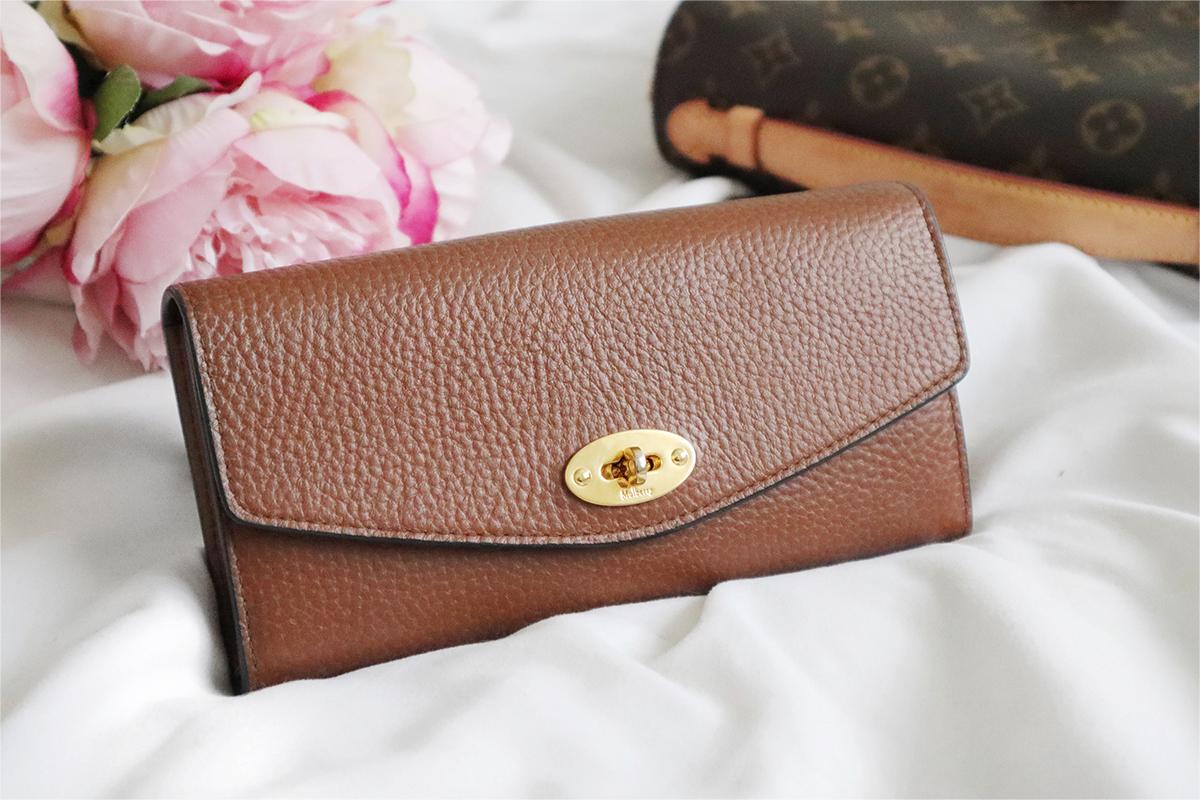
Yes, a Mulberry wallet is worth it — for the right person. If you want a wallet that gets better with age, holds its shape for a decade, and looks quietly expensive without a logo stamped across the front, Mulberry is one of the best options at this price. But if you need structured card organization, you are rough on your things, or you want to change wallets with the seasons, there are better choices.

Mulberry was founded in 1971 in Somerset, England. Their wallet range runs from £195 to £450 depending on style and leather — above Coach, below Bottega Veneta. That positioning is deliberate. They sell craftsmanship and English provenance, not logo visibility. Whether that trade is worth making depends entirely on what you actually value in a wallet.
I have carried the Mulberry Darley Wallet in Oak Natural Vegetable Tanned leather for three years. Here is what that experience taught me.
Are Mulberry Wallets Worth the Money?
Yes — but only if you are buying a Natural Vegetable Tanned leather style. The Softgrain and Scotchgrain options are well-made and genuinely durable, but they do not develop the same character over time. The entire justification for spending this kind of money rests on three things: leather quality, construction longevity, and effective cost spread across a decade of use.
Leather Quality: The Real Differentiator
Mulberry’s Natural Vegetable Tanned (NVT) leather is processed using traditional plant-based tanning at their Somerset factory. At purchase, it is pale — almost cream-colored — and slightly stiff. Some buyers are thrown off by this. They expect premium leather to feel buttery immediately. NVT does not work that way.
The oils from daily handling absorb into the surface over months. The areas you touch most — the clasp, the edges, the card slots — darken first. By month six, the wallet softens noticeably. By year two, the color variation across the surface creates real depth. By year three, the leather looks custom-aged, because it was — by you, specifically.
This is the opposite of how synthetic materials behave. Vegan leather looks its best on day one and deteriorates from there. NVT leather starts neutral and improves for years. That is not a marketing claim — it reflects how vegetable-tanned leather behaves chemically, as the tannins in the hide continue reacting with light and oils long after purchase.
Construction: What Holds Up
The stitching on Mulberry wallets is tight and even. Three years of daily use and I have zero fraying on my Darley. The card slots hold their shape — most wallets under £100 lose this within six months as the leather or synthetic backing stretches under repeated use. The press-stud closure has stayed firm throughout with no loosening.
The zipper on the coin section of the Darley Zip model uses quality hardware. No snagging, no stiffening after years of opening and closing. This matters more than it sounds — a broken zip on a wallet you have bonded with is a genuinely frustrating experience.
Long-Term Cost When You Do the Math
A Mulberry Darley in Oak NVT retails at £295–£350. The same wallet in good condition sells for £150–£200 on Vestiaire Collective five years later. That is 50–60% resale retention. Almost no wallet in the £50–£150 range retains any meaningful resale value. Spread the net cost across ten years of use and you are looking at roughly £10–£15 per year — comparable to replacing a £50 wallet every three to four years, with none of the aging character.
Mulberry Wallet Models Compared: Darley vs Pimlico vs Continental
Mulberry makes around a dozen wallet styles at any given time. Most buyers are deciding between four core options. Here is how they compare across the metrics that matter for daily use:
| Model | Retail Price | Dimensions (open) | Card Capacity | Leather Options | Best For |
|---|---|---|---|---|---|
| Darley Bifold | £295 | 19 × 10 cm | 8–10 cards | NVT, Softgrain | Most buyers — balanced size and function |
| Darley Zip | £350 | 19 × 10 cm | 8–10 cards + coins | NVT, Softgrain | Daily carry with cash and coins |
| Pimlico Slim | £195 | 15 × 8 cm | 6 cards | Softgrain only | Minimal carry, small bags, cashless users |
| Continental | £345 | 20 × 10 cm | 12+ cards | NVT, Softgrain | Travel and heavy card carriers |
| Bayswater Wallet | £395 | Varies | 8 cards | Varies seasonally | Gift purchase or collector |
My pick for most people is the Darley Bifold in Oak NVT. It is the style that most rewards the investment through long-term leather development. If you carry four to six cards and have gone mostly cashless, the Pimlico Slim makes more sense at £100 less. Do not buy the Bayswater Wallet as a functional everyday piece — it is more sculptural than practical, and the price reflects aesthetics more than utility.
The Darley Bifold (£295)
Eight card slots, two full-length cash sleeves, no coin section. The snap closure sits flush when the wallet is full. Available in Oak, Black, Antique Gold, Porcelain, and seasonal colorways. Oak NVT is the version worth buying for the aging story. Black NVT is the safer gift choice — neutral and universally wearable.
The Continental Wallet (£345)
Opens fully flat to reveal 12+ card slots, a full coin zip, and three cash compartments. This is a travel wallet masquerading as an everyday one. If you regularly carry foreign currency, loyalty cards, and receipts alongside your daily cards, it works perfectly. For a streamlined daily setup with one main bag, it is too bulky to be comfortable.
How Long Do Mulberry Wallets Last? Leather Quality Explained
Most wallet reviews skip this question. They photograph a new product, describe how the leather smells, and call it done. What they do not tell you is what the same wallet looks like in year three — or why two technically identical wallets end up looking completely different after that point.
The answer is leather grade and lifestyle. Both matter equally, and mismatching them is the most common expensive mistake buyers make with premium leather goods.
Natural Vegetable Tanned Leather: How the Aging Works
NVT leather is tanned with plant-based compounds — historically, oak bark — rather than the chromium salts used in most commercial leather production. The result is a hide that remains chemically reactive after tanning, which is why it continues changing color and texture as it absorbs oils and light over years of use.
When you buy an Oak NVT Darley, it feels almost waxy. The surface has a faint sheen. Within two to three months of daily carrying, the oils from your hands begin absorbing into the surface. The leather softens. The edges — which see the most friction — begin darkening toward amber. By six months, the wallet has visibly warmed in color. By two years, it has the look of leather that has been around — in the best possible sense.
The conditioning routine is simple. Apply a small amount of leather conditioner twice a year. Leather Honey ($15 for 8oz) and Mulberry’s own Leather Food (£15, sold in stores and online) both work well. Avoid prolonged direct sunlight, which causes uneven bleaching rather than natural patina development. If the wallet gets wet, blot gently with a cloth and let it air dry at room temperature. Heat sources — hairdryers, radiators — strip out the oils and can crack the surface over time.
Softgrain Leather: The More Forgiving Choice
Softgrain is the other leather you will encounter across the Mulberry wallet range. The surface is uniform, slightly glossy, and visually consistent from edge to edge. It will not age the same way as NVT — the patina development is minimal. But it is far more resistant to surface scratches and inconsistent handling.
If you drop your wallet into a bag alongside keys and lip balm and a stray pen cap, NVT leather will show contact marks on the surface until it has built up enough patina to absorb them — which can take six months or more. Softgrain handles this better from day one. The honest advice: if you are disciplined about keeping your wallet clean and protected, buy NVT. If your bag is more chaotic, buy Softgrain and do not look back.
What Fails First: Common Wear Points
- Card slot stretch: Consistently overfilling the slots — more than 10 to 12 cards — causes permanent stretch and the slots lose their grip. This is a use pattern problem, not a manufacturing defect.
- Corner wear: Corners show wear before any other area on any leather wallet. On NVT, corner wear eventually blends into the broader patina. On Softgrain, it can look uneven if the wallet is not conditioned regularly.
- Snap impression: The press-stud closure leaves a faint circular mark on the inner leather after years of daily use. Purely cosmetic — no effect on function.
- Zip pull finish: On pre-2026 Mulberry wallets, the gold-tone zip pulls on coin compartments sometimes tarnish or flake over time. Current production has improved plating. When buying secondhand, check the zip pull finish carefully before committing.
How to Buy an Authentic Mulberry Wallet
Buy from Mulberry directly, from an authorized stockist like Selfridges, John Lewis, or Harrods, or from verified resale platforms like Vestiaire Collective and The RealReal — both of which include authentication services. Fake Mulberry wallets exist but are concentrated on unverified marketplaces: Facebook Marketplace, some eBay listings without seller track records, and wholesale-style sites offering prices that are obviously too low.
The most reliable authentication indicator is the tree logo and serial number stamp inside the wallet. Genuine Mulberry stamps are deeply pressed into the leather, consistently sized, and cleanly proportioned. Fakes are typically shallow, with fonts that look slightly off or misaligned relative to the tree emblem. Genuine NVT leather also has a distinctive earthy smell — not plasticky or chemical. Hardware on genuine pieces feels substantial and sits flush against the leather.
A core rule: a price that looks too good usually is. An Oak NVT Darley retails at £295. Authenticated pre-owned models on Vestiaire sell for £150–£200. If a listing offers one for £60–£80 described as brand new, it is not. Mulberry offers free authentication at their UK flagship stores — use this service when buying expensive secondhand pieces in person before handing over money.
Discount outlets and sample sales do occasionally carry genuine Mulberry pieces at reduced prices. These are worth pursuing. Mulberry’s own outlet online and physical outlets like Bicester Village in Oxfordshire stock genuine discounted stock without any authenticity risk.
When to Buy Something Other Than Mulberry
Mulberry is not the right wallet for everyone. Here is when a different brand makes more sense:
- Budget under £150. The Aspinal of London Hyde Park Wallet (£145–£195 retail, frequently 20% off in seasonal sales) offers comparable full-grain leather quality with English manufacture. Better value than a discounted Mulberry sourced through a grey-market third-party retailer.
- You carry 15 or more cards. The Smythson Mara Zip Wallet (£395) has a superior card slot architecture — more organized, more structured, easier to locate specific cards quickly. For heavy card users, the Smythson is a better functional tool than any Mulberry wallet at any price point.
- You are genuinely rough on your things. Skip premium leather entirely. The Bellroy Note Sleeve ($119 / approximately £95) is engineered for daily abuse — a pull-tab card mechanism, RFID blocking as standard, and a slim profile that does not stretch under pressure. It survives conditions that would leave an NVT Mulberry looking neglected.
- You want fashion-forward color variety. The Coach Tabby Wallet ($195 / approximately £155) comes in dozens of seasonal colorways and uses decent quality leather at a lower price. Better for people who rotate their accessories with their wardrobe. Less long-term durability, but lower emotional cost when it is time to move on.
- You are buying as a gift and genuinely unsure of preferences. The Mulberry Pimlico Slim in Black is the lowest-risk choice in the range. Neutral, compact, and it suits almost anyone without committing them to a specific leather-aging journey they may not want to maintain.
The hardest case to make for spending £295 on a Mulberry wallet is when the buyer does not actually care about the specific properties that justify the price: vegetable-tanned leather, English manufacturing, and a decade-long use horizon. If those things do not matter to you, spend £100 less on an Aspinal or Coach outlet piece and feel no guilt about it.
If those things do matter, a well-chosen Mulberry wallet is one of the most satisfying everyday objects you can carry.