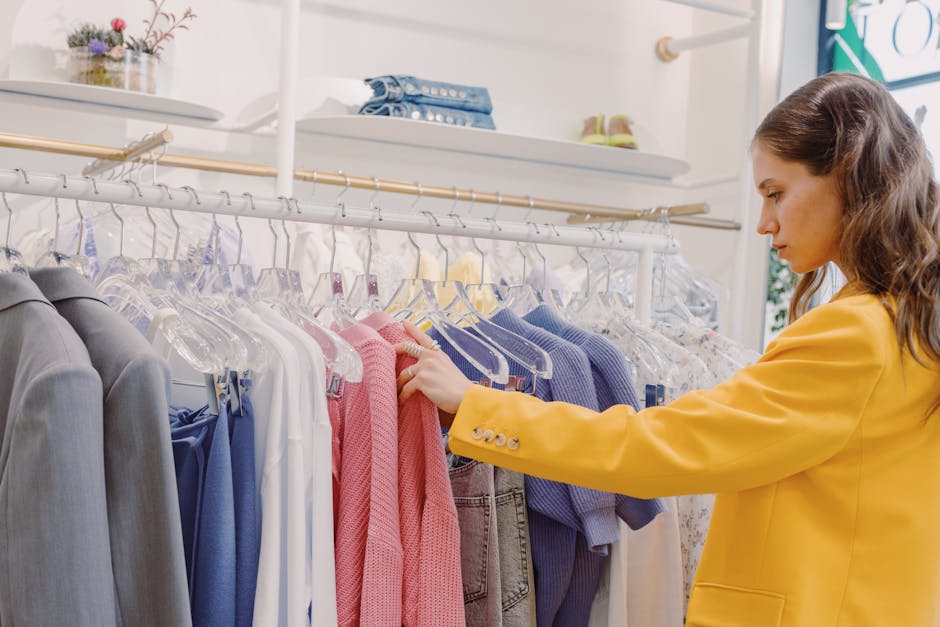
According to the 2023 ThredUp Resale Report, the global secondhand apparel market is projected to reach $350 billion by 2027, growing at a rate three times faster than the overall global apparel market. This shift is not merely a trend driven by nostalgia or fluctuating economic conditions; it represents a structural realignment of how consumers perceive value and longevity in their wardrobes. For the disciplined shopper, the thrift store is no longer a chaotic bin of discarded fast fashion but a repository of high-quality textiles and heritage manufacturing that far exceeds the quality of contemporary mid-tier retail. Identifying the best thrift store clothing finds requires a departure from brand-name obsession toward a more technical understanding of garment construction and material science.
Understanding the Global Resale Market Growth and Environmental Impact
The sheer volume of clothing production—estimated at over 100 billion garments annually—has created a surplus that ensures high-quality items frequently end up in secondary markets. While the rise of ultra-fast fashion has saturated thrift racks with polyester and poorly constructed acrylics, it has also made the “good stuff” stand out to those who know what to look for. The environmental cost of a single new cotton t-shirt involves approximately 2,700 liters of water; by contrast, sourcing that same item second-hand effectively negates the resource-heavy manufacturing phase of the product’s lifecycle.
Data suggests that extending the life of a garment by just nine months can reduce its carbon, water, and waste footprints by 20 to 30 percent. This makes the hunt for durable goods a matter of ecological stewardship as much as personal style. However, the market is currently bifurcated. On one hand, you have curated vintage boutiques that command high premiums; on the other, you have community-based thrift stores where the pricing is disconnected from the item’s actual market value. The latter is where the highest utility is found, provided the shopper can distinguish between a 1990s Italian-made wool blazer and a modern polyester blend that will pill after three wears.
The Shift Toward Circularity
Retailers are increasingly adopting resale programs, but the true value remains in the independent thrift ecosystem. When we look at the lifecycle of a garment, the highest value retention is found in items produced before the mid-2000s, a period before many heritage brands moved production to lower-cost facilities with reduced quality control. This historical context is essential for anyone looking to build a wardrobe that lasts decades rather than seasons.
Identifying High-Quality Natural Fibers: Silk, Cashmere, and Virgin Wool
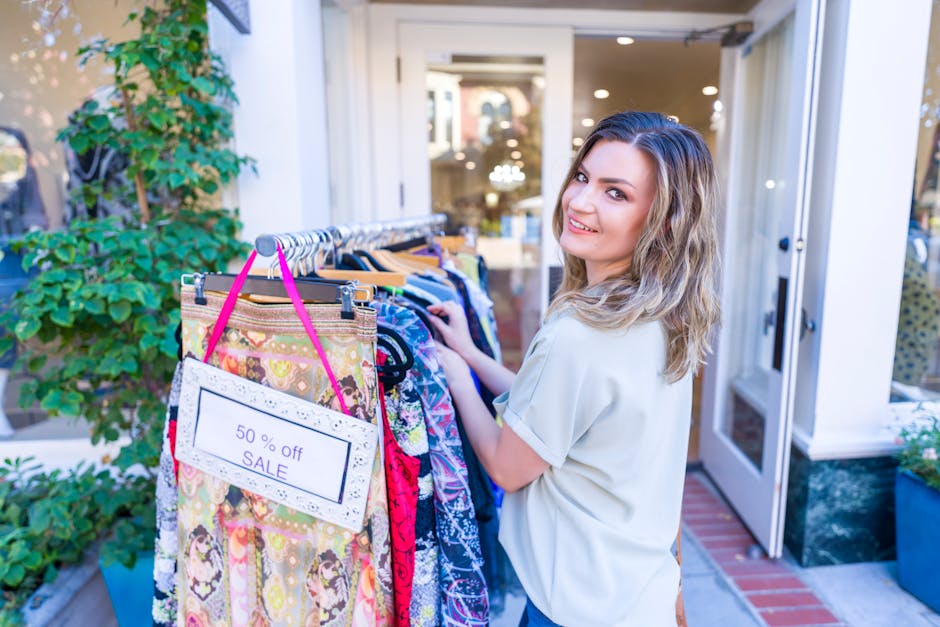
The most reliable metric for a successful thrift find is the material composition. Synthetic fibers like polyester, nylon, and acrylic are derived from petroleum and are designed for cost-efficiency, not comfort or longevity. In contrast, natural fibers offer superior breathability, thermoregulation, and a graceful aging process. When scanning a crowded rack, your hands should be your primary tool. Natural fibers have a specific tactile feedback—a “coolness” to silk, a “dry warmth” to wool, and a “buttery softness” to high-grade cashmere.
The Cashmere Quality Spectrum
Not all cashmere is created equal. Modern “budget” cashmere often uses shorter fibers that lead to immediate pilling. When thrifting, look for older plys. A 100% cashmere sweater from a brand like Johnstons of Elgin or Pringle of Scotland (often found for $10-$20 in thrift stores) will have a significantly higher staple length than a $100 new sweater from a mall brand. Longer fibers mean the garment will hold its shape and resist surface abrasion over time.
Silk and Wool Identification
- Silk: Look for a subtle sheen rather than a plastic-like gloss. Check the seams; silk is often finished with French seams or more delicate stitching. Brands like Equipment or vintage Diane von Furstenberg are top-tier finds.
- Virgin Wool: Unlike recycled wool, virgin wool has never been processed before, maintaining the fiber’s full strength. Look for the “Woolmark” logo on the care tag, a sign of quality assurance that has been used since 1964.
- Linen: Ideal for summer, linen is exceptionally durable. Vintage 100% linen pieces from brands like Baird McNutt or 1990s Gap (which used higher-grade fabrics then) are excellent finds.
| Fabric Type | Thrift Price (Avg) | Retail Value (New) | Key Durability Signifier |
|---|---|---|---|
| Cashmere Sweater | $8 – $25 | $200 – $600 | 2-ply or 3-ply thickness |
| Silk Blouse | $6 – $15 | $150 – $300 | French seams, mother of pearl buttons |
| Wool Blazer | $12 – $40 | $350 – $900 | Canvas interlining (not glued) |
The Technical Guide to Vintage Denim and Workwear Identification
Denim is perhaps the most sought-after category in the second-hand market, yet it is also the most misunderstood. The obsession with “vintage Levi’s” is rooted in the fact that older denim was produced on shuttle looms (selvage) or with heavier-weight cotton that hasn’t been blended with elastane. Modern “stretch” denim has a shelf life; once the elastic fibers break down, the jeans lose their shape. Vintage 100% cotton denim, however, molds to the wearer’s body and can be repaired indefinitely.
Dating Levi’s 501s and Other Icons
To find a high-value pair of Levi’s, you must look beyond the red tab. First, check the care tag. If it’s a small, paper-like tag located on the inside hip, the jeans likely date from the 1980s or 90s. If there is a “Big E” on the red tab (the ‘E’ in Levi’s is capitalized), you have found a pair produced before 1971, which can be worth hundreds or even thousands of dollars. Even the “Orange Tab” Levi’s, produced as a more fashion-forward line in the 60s and 70s, are prized for their unique silhouettes and durable denim.
Workwear: Carhartt and Dickies
The current market for vintage Carhartt Detroit Jackets (Model J01 or J97) has seen prices soar to $150-$300 on resale sites, yet they still appear in thrift stores for under $30. The value lies in the 12-ounce firm-hand cotton duck fabric. Unlike newer versions, vintage workwear often features a unique patina—natural fading and distressing that cannot be replicated by factory washing. When evaluating these, check the zipper (heavy-duty YKK or Talon brass) and the lining (blanket lining is more desirable than thermal mesh).
A critical tip for denim hunters: Ignore the size on the tag. Vintage denim has often shrunk or stretched over decades, and sizing standards have changed significantly. A vintage size 34 might measure as a modern 30. Always carry a small measuring tape.
Spotting Designer Luxury and Heritage Brands in the Wild
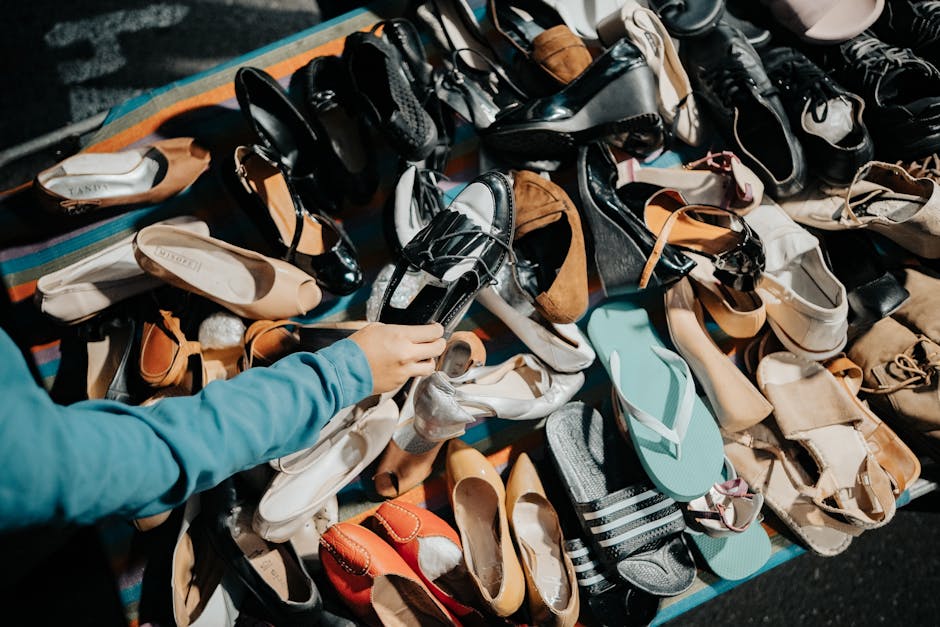
Finding a luxury label in a community thrift store is the statistical equivalent of a “grail” find. However, it happens more often than one might think because many high-end brands use understated logos. This is the realm of “quiet luxury,” where the value is in the construction rather than the branding. Brands like Max Mara, Old Celine, Loro Piana, and Hermès often end up on racks because the average sorter doesn’t recognize the name or the minimalist aesthetic.
Authentication Markers for Luxury Finds
If you find a suspected designer item, the hardware is the first giveaway. Luxury brands use heavy, branded zippers (Riri or Lampo) and solid metal buttons. The stitching should be perfectly uniform, with a high stitch-per-inch count. Look at the interior labels; high-end garments are almost always lined in silk or Bemberg (cupro), a breathable semi-synthetic that feels like silk but is more durable. If a “designer” coat has a polyester lining, proceed with extreme caution as it may be a counterfeit or a lower-end diffusion line.
The Burberry Trench Coat Test
The Burberry Trench Coat is a frequent thrift store find if you look in the right places. To authenticate a vintage Burberry, check the pattern alignment of the Nova Check lining. The lines should meet perfectly at the seams. Older models (pre-1999) will say “Burberrys” with an ‘s’, while newer ones say “Burberry.” A genuine vintage trench in good condition is easily worth $300-$600, but can often be found for $50 in charity shops that don’t specialize in vintage.
Evaluating Outerwear and Leather Goods for Longevity
Outerwear offers the best return on investment in the thrift world. Because coats are worn over other layers, they generally suffer less wear and tear than trousers or shirts. Furthermore, the retail markup on quality outerwear is astronomical. A well-made leather jacket or a heavy wool overcoat can easily cost $800 new, but because they are bulky and take up space, thrift stores often price them aggressively to move inventory.
Leather Identification: Genuine vs. Full Grain
The term “Genuine Leather” is actually a marketing grade for one of the lowest qualities of leather, made by bonding scraps together. When thrifting, you want Full Grain or Top Grain leather. These hides are thicker, heavier, and develop a patina over time. Look for brands like Schott NYC (look for the “Perfecto” label), Vanson, or even vintage Wilson’s Leather from the 70s (which used much thicker hides than their modern counterparts).
Technical Outerwear: Patagonia and North Face
Performance gear from Patagonia, The North Face, and Arc’teryx is frequently donated when the waterproof coating (DWR) begins to fail or a zipper breaks. What many don’t realize is that these brands often have lifetime warranties or repair programs. A $10 Patagonia fleece with a broken zipper can often be sent back to the manufacturer for a free or low-cost repair, restoring a $150 garment to full utility. This “arbitrage” of repairability is a sophisticated way to build a high-performance wardrobe on a budget.
The Economics of Restoration: Tailoring and Cleaning Costs
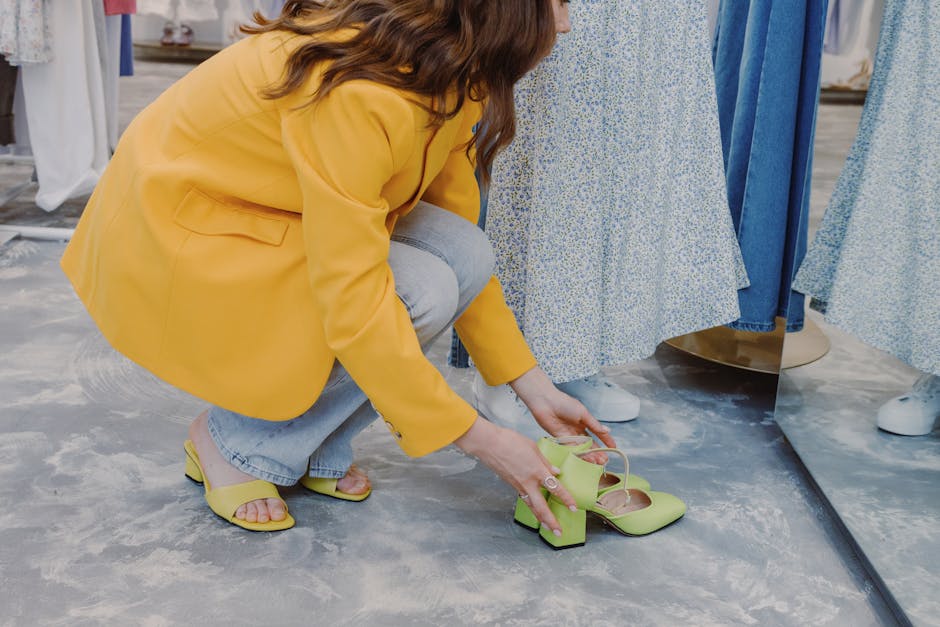
The final stage of securing the best thrift store clothing finds is calculating the “True Cost.” A $5 blazer is not a deal if it requires $100 in tailoring and $50 in specialized cleaning to be wearable. However, if the garment is made of high-quality material, these investments are often justified. A deep researcher understands that a thrifted item is a raw material that may require refinement.
When to Invest in Professional Services
Certain flaws are “deal-breakers,” while others are easily managed. Moth holes in wool are notoriously difficult and expensive to fix (reweaving can cost $50+ per hole). However, a missing button, a fallen hem, or a stuck zipper are minor issues. A professional tailor can take a boxy 1980s blazer and slim the sleeves and waist for roughly $40-$60, resulting in a custom-fit garment that looks like it cost $1,000.
- Dry Cleaning: Essential for any thrifted wool or silk. Budget $10-$20 per item.
- Leather Cleaning: More expensive ($50+). Only buy thrifted leather if it doesn’t have a strong odor or major mold, as these are difficult to extract.
- Shoe Repair: A quality pair of Goodyear-welted shoes (like Allen Edmonds or Alden) can be completely resoled by a cobbler for $80-$120. Given that these shoes retail for $400+, finding a pair for $20 at a thrift store is a major win.
Ultimately, the art of thrifting is an exercise in pattern recognition and material literacy. By shifting focus from the brand name on the tag to the quality of the fiber and the integrity of the construction, you can curate a wardrobe that is both economically prudent and stylistically superior. The best finds are those that have already stood the test of twenty years and possess the structural integrity to stand for twenty more.