
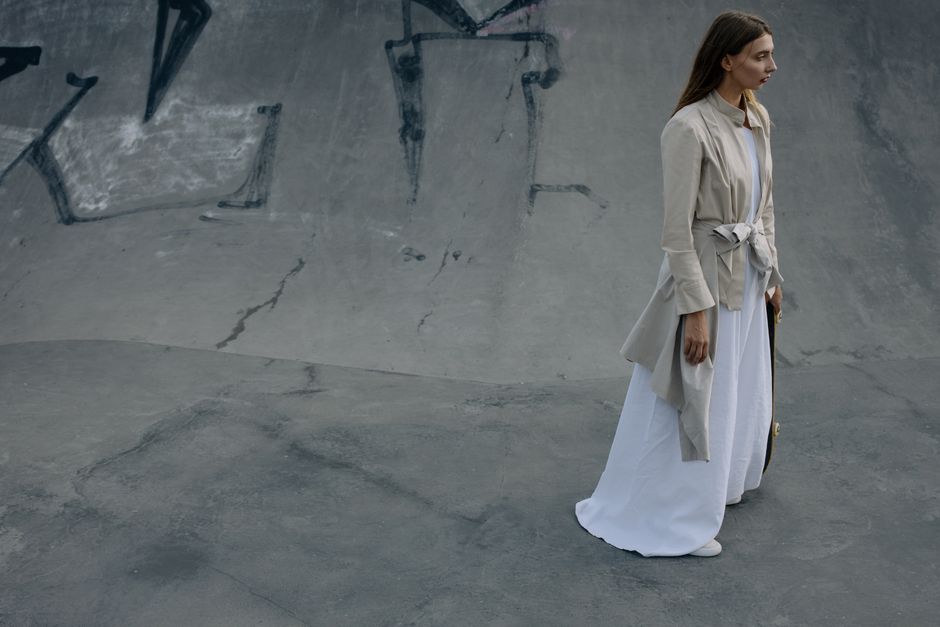
A trench coat began as military rainwear, but its most useful modern feature is not the belt or the shoulder tabs. It is the thin layer of protection between unpredictable spring weather and the clothes underneath. The right mac handles light rain, cool mornings, office heating, and evening wind without looking like technical outdoor gear. The wrong one is stiff, shiny, too short, or impossible to layer.
Why the mac works so well in spring
The best spring trench coat solves a simple wardrobe problem: you need coverage without winter weight. A mac gives you a shell over a shirt, knit, or light blazer, then folds into a much smaller outfit system than a wool coat. That makes it useful during the weeks when the temperature changes sharply between morning and afternoon.
The original job was weather control
Traditional trench coats use tightly woven cotton gabardine because the weave helps shed light rain while still allowing more airflow than a fully sealed rain jacket. The coat should keep drizzle off your shoulders and upper body. It will not replace a waterproof shell in prolonged heavy rain. That distinction matters. A water-resistant coat can become saturated at the seams, cuffs, and shoulder panels after enough exposure.
The classic details still have a purpose
A storm flap helps direct water away from the chest. A back vent gives walking room. Adjustable cuffs reduce wind around the wrists. The belt changes the shape from straight and practical to more defined and polished. Epaulettes are mostly decorative on modern coats, but they still create the visual structure people expect from a classic mac.
Verdict: buy a trench when you want one light outer layer that can move between casual clothes, workwear, and smarter evening outfits. Choose a proper rain shell instead if staying dry matters more than the tailored look.
How to choose the right spring trench coat fabric
Fabric determines how a trench feels, hangs, and performs. Ignore the word luxury on the label. Read the fiber content, lining, finish, and care instructions. A good spring coat should feel substantial enough to hold its shape, but not so heavy that it behaves like a winter overcoat.
Cotton, cotton blends, and technical fabrics
For the most classic look, choose tightly woven cotton or cotton gabardine. It has a dry hand and develops character with wear, but it can crease and may need specialist cleaning. Cotton-polyester blends usually resist wrinkles better and dry faster. They are practical for commuting, though some versions feel slick or noisy. Nylon and polyester shells provide better rain resistance, but they can look more like outdoor equipment unless the cut is clean and the surface is matte.
What spring weight should feel like
Look for an uninsulated coat or a lightly lined model. You should be able to wear it over a fine knit or a slim blazer without the sleeves pulling. A removable liner adds flexibility, but a thick fixed lining can make the coat too warm by late spring. Check the shoulders, too. A soft raglan sleeve creates an easier, relaxed shape. A set-in sleeve looks sharper and gives more shoulder definition.
Colour affects usefulness. Stone, warm beige, navy, olive, and black all work with common spring wardrobes. Beige looks traditional but shows marks quickly. Navy is the easiest option for dark denim, tailoring, and black shoes.
Six fit tests to use before buying
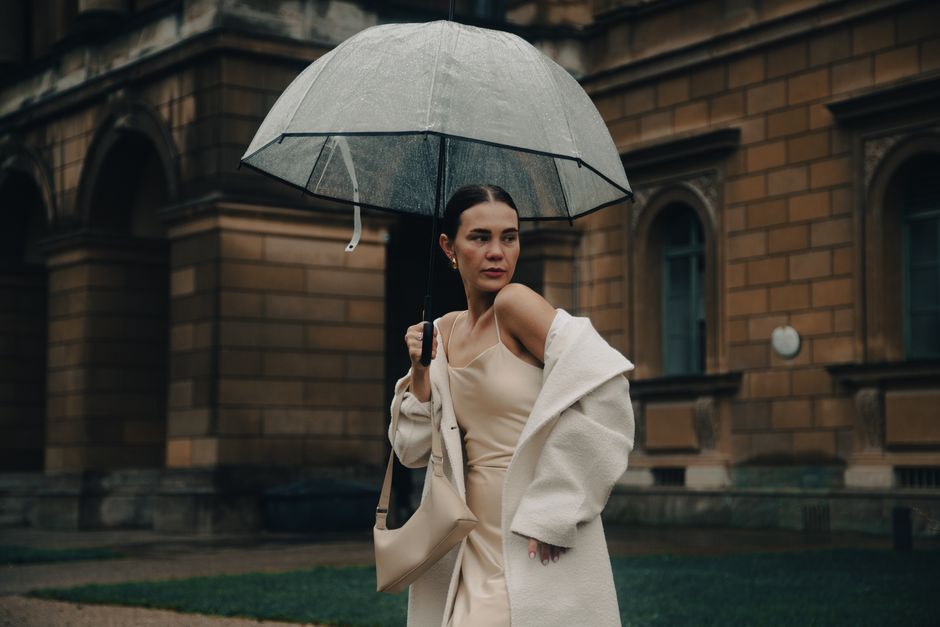
A trench coat should look relaxed when closed and controlled when belted. Use these checks in a fitting room, with the clothes you expect to wear underneath.
- Shoulder test: raise both arms forward. The back should move without pulling across the shoulder blades.
- Sleeve test: the cuff should reach the wrist bone, or sit 2 to 3 centimetres below it when your arms hang naturally.
- Layer test: wear a sweater or blazer underneath. You need roughly 5 to 8 centimetres of ease across the chest, not a tight, shirt-like fit.
- Length test: a versatile hem usually lands between mid-thigh and 5 centimetres below the knee. Longer coats look elegant but can overwhelm a petite frame.
- Belt test: tie the belt without forcing the buttons to overlap. If the fabric bunches heavily at the back, the coat is too small or too tapered.
- Sitting test: sit down with the coat closed. The vent should open naturally, and the buttons should not strain across your hips.
The strongest choice for most wardrobes is a mid-length, lightly relaxed coat with enough room for one warm layer. Very slim trenches photograph neatly but become frustrating in real spring weather. Oversized cuts are easier to layer, yet they need a clean shoulder and a controlled hem or they can look like borrowed clothing.
Mistakes that make a trench coat look cheap
The biggest mistake is buying the right details in the wrong proportions. A coat can have epaulettes, a belt, and a double-breasted front yet still look poor if the fabric shines, the buttons feel light, or the hem fights the clothes underneath.
Do not confuse decoration with construction
Too many loose straps and oversized buckles can make a coat look costume-like. The belt should lie flat, the button spacing should look balanced, and the collar should stand without constant adjustment. Check the lining at the armholes. Loose threads, twisting seams, and a lining that pulls when you move are signs that the coat will age badly.
Avoid the wrong finish and the wrong size
Very glossy polyester reflects light and often makes a classic mac look like a cheap rain poncho. Matte cotton twill or a restrained technical weave looks more expensive. Do not size down to create a narrow waist. A trench needs room for movement, and the belt already gives you control at the middle.
Another common error is choosing pale beige because it looks traditional, then wearing it with no plan for cleaning. If you commute by bicycle, travel often, or carry an open coffee cup, navy or olive may serve you better.
How to style a mac for real spring weather
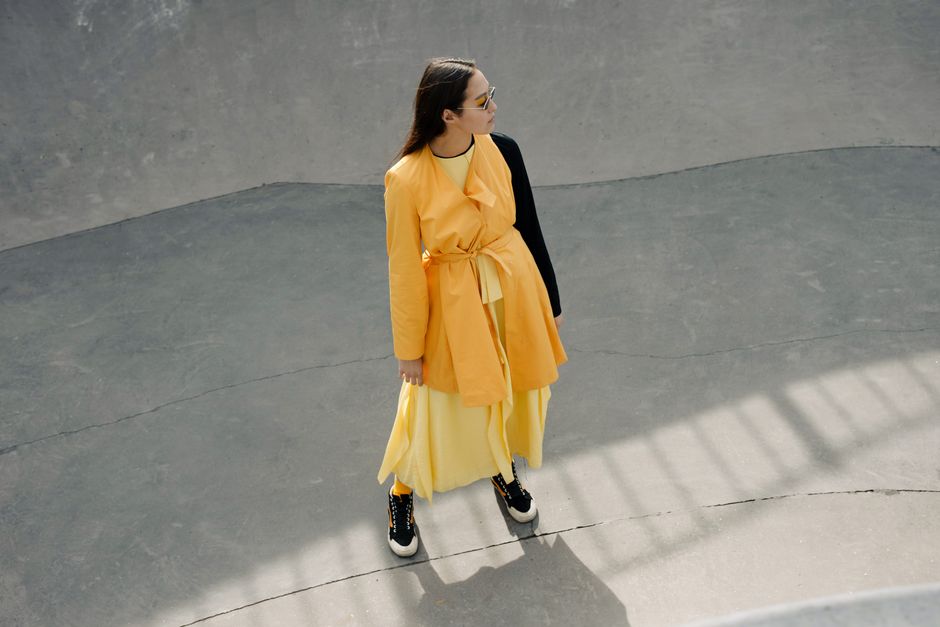
The easiest styling rule is to keep the coat classic and let one other item provide the personality. That could be a bright knit, a striped shirt, a textured bag, or a sharper shoe. The coat does not need to carry the whole outfit.
What should you wear with a trench and jeans?
Use straight-leg or relaxed jeans, a tucked T-shirt or fine knit, and loafers, slim trainers, or ankle boots. Leave the coat open when the outfit underneath is simple. Tie the belt behind your back when you want a clean front without losing shape. Avoid pairing a very oversized trench with extremely wide jeans unless you add a defined shoe or a shorter top to create proportion.
Can a trench coat work with tailoring?
Yes. Choose a coat that is 5 to 8 centimetres longer than the blazer underneath and check that the sleeve does not bunch. Navy, charcoal, and stone work well with gray trousers. For dresses and skirts, the coat hem should sit close to the dress hem or clearly above it. A nearly matching length often looks accidental.
How do you handle cold mornings?
Layer a fine merino sweater under the coat instead of adding a bulky hoodie. Add a scarf only when needed; a large scarf can crowd the collar and obscure the shoulder line. For wet days, keep the trench for short city trips and switch to a sealed rain jacket for long outdoor walks.
The best everyday formula is a mid-length mac, one thin insulating layer, straight trousers or jeans, and shoes that can tolerate wet pavement.