
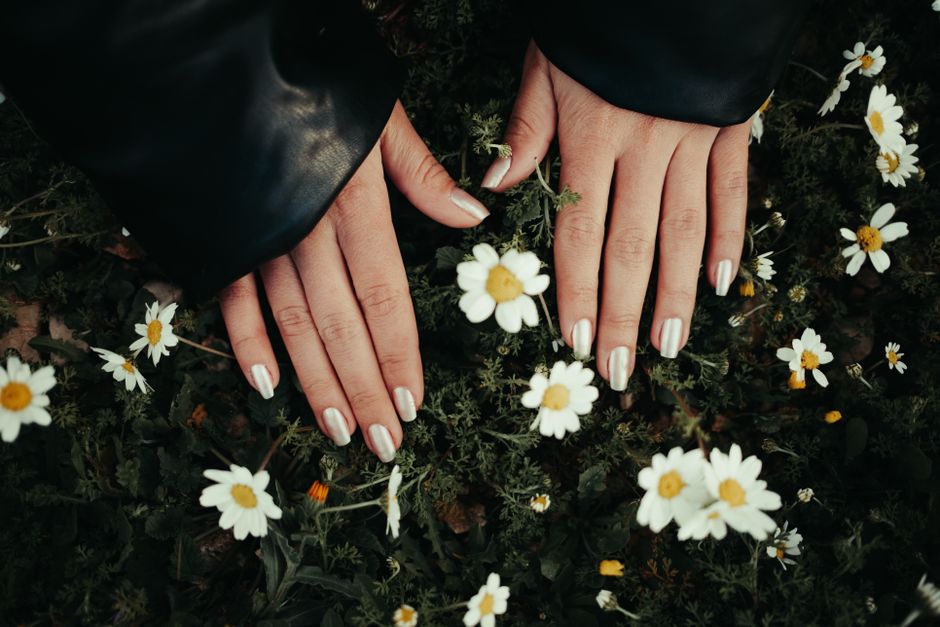
Cold air can leave nails dry, thin, and easier to split, but winter manicure colour does not have to look dull. The best approach pairs rich seasonal shades with a short care routine that protects the nail plate, cuticles, and skin around each nail.
Which winter nail colours suit the season best?
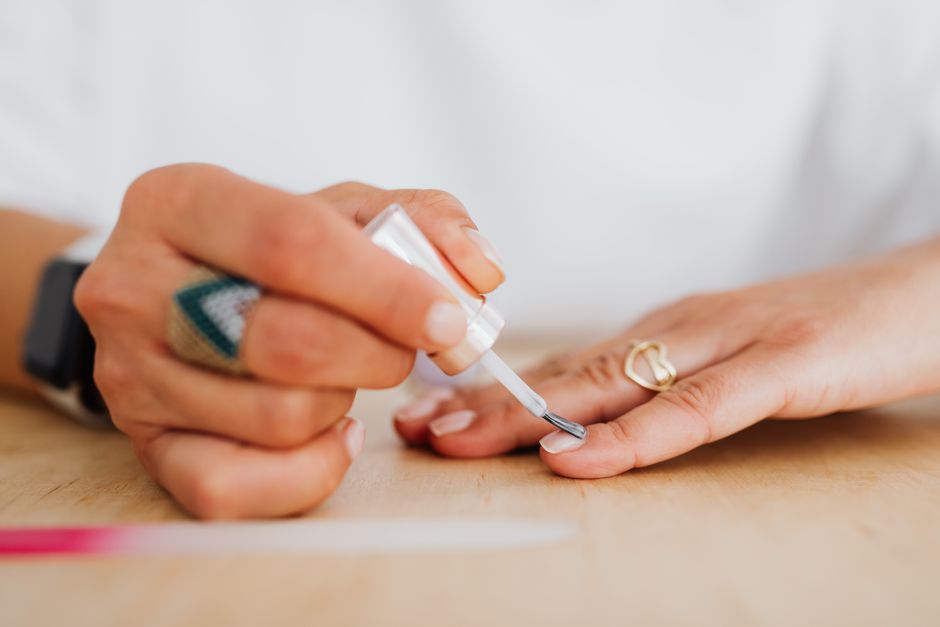
Deep berry is the best all-round winter nail colour because it looks polished on short nails, works with dark and light clothing, and does not show small chips as quickly as pale cream. Navy, chocolate brown, forest green, and soft grey are close behind. Choose a finish based on how much maintenance you want.
| Colour family | Best finish | Works best on | Maintenance verdict |
|---|---|---|---|
| Deep berry or burgundy | Gloss cream | Short, medium, and oval nails | Best daily choice |
| Forest green | Gloss or fine shimmer | Square and squoval nails | High impact, moderate upkeep |
| Chocolate brown | Gloss cream | Short rounded nails | Most forgiving dark shade |
| Midnight navy | Gloss or metallic | Medium almond nails | Striking but chips show clearly |
| Milky white | Sheer cream | Short, neat nails | Fresh but needs clean application |
| Steel grey | Chrome or shimmer | Medium square nails | Best for evening wear |
Pick a shade by wardrobe, not by trend
Deep berry pairs with camel, charcoal, denim, and black. Forest green looks strongest beside cream knitwear, tan leather, and gold jewellery. Chocolate brown is the easiest match for beige, rust, olive, and burgundy clothes. If your winter wardrobe already contains several dark colours, use milky white or icy grey to create contrast.
Match the polish formula to your schedule
OPI Infinite Shine comes in a 15 mL bottle and suits anyone who wants an air-dry manicure with a glossy finish. Essie Gel Couture uses a 13.5 mL colour bottle and is a good choice for a simple two-step home manicure. Sally Hansen Miracle Gel comes in a 14.7 mL bottle and is useful when you want a gel-style look without curing each layer under a lamp. For a salon-style system, CND Vinylux is sold in 15 mL bottles and works well with its matching top coat.
The clear winner for busy hands is a deep berry cream in an air-dry long-wear formula. It gives the most colour payoff with the least visible wear.
What is the exact winter nail-care routine?
Follow these seven steps after your final hand wash of the day. The routine takes about five minutes and works best when repeated nightly for at least two weeks.
- Step 1: Remove polish gently. Use an acetone-based remover for stubborn layers rather than scrubbing the nail with repeated cotton-pad pressure. For ordinary air-dry polish, one controlled pass is usually enough.
- Step 2: File in one direction. Use a fine glass file or a 180-to-240-grit file. Start at one sidewall and move toward the centre. Do not saw back and forth across a weak edge.
- Step 3: Shorten exposed corners. Keep the free edge at roughly 1 to 2 millimetres while peeling or splitting continues. A shorter edge has less leverage when it catches on fabric.
- Step 4: Wash with lukewarm water. Skip very hot water and harsh scrubbing around the cuticle. Pat hands dry, including under the free edge.
- Step 5: Apply hand cream. Choose a cream with glycerin, petrolatum, shea butter, or dimethicone. Cover the backs of the hands, fingertips, sidewalls, and the skin beneath the free edge.
- Step 6: Seal the cuticles. Massage one small drop of cuticle oil into each nail fold. Jojoba-based oil feels light and spreads well, while thicker petrolatum works better overnight for cracked skin.
- Step 7: Protect the work. Wear rubber gloves with a cotton liner for dishes and cleaning. Use insulated gloves outdoors, then apply cream again after removing them.
Do not cut living cuticle tissue. Push back only softened, loose skin with a clean wooden stick, and stop if it stings or bleeds. Never use nails as tools to open cans, scrape labels, or lift package seals.
The strongest winter habit is not a special polish. It is wearing gloves for wet work and applying moisturiser every time hands are washed. Those two actions prevent more breakage than adding another coat of hardener.
Which manicure method gives the best balance of colour and nail strength?
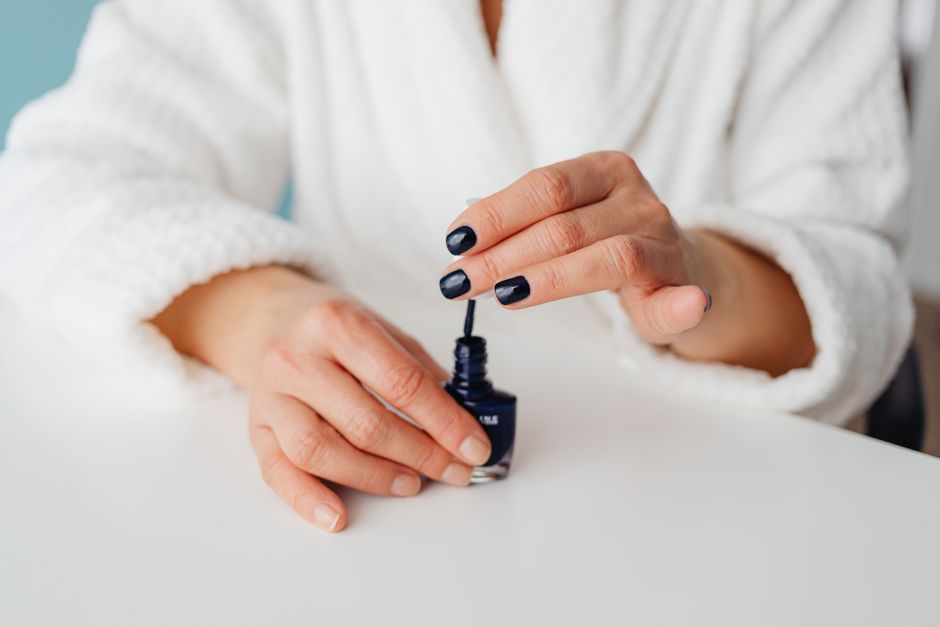
Choose a thin, flexible air-dry manicure for weak winter nails. It removes more easily than a thick gel overlay and puts less stress on peeling tips. A glossy cream shade also hides small surface ridges better than a sheer shimmer or mirror chrome finish.
Use a strengthener when the nail bends too easily
OPI Nail Envy is a familiar 15 mL strengthening treatment that can be worn alone or under colour. It makes sense for nails that bend and tear at the free edge. Apply thin coats according to the label and remove the full layer before it becomes thick and uneven. More coats do not automatically mean stronger nails.
Use a flexible colour system for regular polish wearers
OPI Infinite Shine and CND Vinylux are practical choices for people who want strong colour without a lamp. Essie Gel Couture suits a neat home manicure because its wider brush can cover the nail in fewer strokes. Sally Hansen Miracle Gel is the strongest pick for a gel-like shine without salon curing, but its two-step colour and top-coat system still needs careful removal.
The best method for peeling nails is one thin base layer, two thin colour layers, and one top coat. Leave a narrow gap around the cuticle instead of flooding the skin. Cap the free edge with a small amount of polish, but do not build a thick ridge underneath the nail.
Know when not to use a hard gel or acrylic overlay
Skip a rigid overlay if the nail plate is already lifting, painful, or badly split. The extra length can act like a lever and pull a damaged nail farther from the nail bed. Do not peel off cured product when it starts to lift. Soak or file it off using the system instructions, then give the nail a short, moisturised period before applying another overlay.
For everyday winter wear, flexible polish wins. Hard enhancements make sense only when the natural nail is healthy and a trained professional can remove the product safely.
How should you fix common winter manicure mistakes?
Why do my dark colours chip after two days?
Dark polish shows every chip, but fast wear often comes from oil, water, or thick layers. Wipe each nail with remover before applying a base coat, even if the nail looks clean. Keep coats thin and allow the previous layer to become touch-dry. Seal the top coat across the free edge. If the tip is already split, colour will not hold it together for long; file it smooth first.
Why do my cuticles crack after applying hand cream?
Hand cream may soften the skin without sealing it for long. Apply it after every wash, then use cuticle oil or a thin layer of petrolatum before bed. Avoid picking at hangnails. Clip only the loose strand with clean nippers, and do not cut into attached skin.
Can nail polish make weak nails worse?
Polish itself does not always cause weakness, but rough removal can. Peeling off colour can pull away the top layers of the nail. Aggressive buffing can also thin the surface. Use remover, wait for it to dissolve the coating, and wipe in one direction. If a product causes burning, itching, swelling, or repeated redness, remove it and stop using it.
The clear correction is to fix the preparation and removal stages before buying another treatment. Most winter manicure failures start before the colour goes on.