You’re probably here because you want to switch to a secondhand-only wardrobe but worry about ending up with a closet full of things you never wear. I had the same concern. So I tracked every purchase for 18 months — 142 items, all pre-owned. Here’s what the data says works, what fails, and where buying new still makes sense.
The Real Cost of a Secondhand Wardrobe — By the Numbers
Total spent on 142 items: $1,847. Average cost per piece: $13.01. Compare that to the average fast-fashion price of $25–$35 per item. Savings: roughly 50–60% per garment.
But saving money isn’t automatic. You have to account for the time cost. I spent roughly 2.5 hours per week sourcing — browsing apps, visiting thrift stores, checking listings. That’s 180 hours over 18 months. At minimum wage, that’s $1,350 in opportunity cost. Net savings after time: about $500.
The real win isn’t just the dollar amount. It’s the quality jump. A Patagonia Better Sweater ($89 used, originally $139) still looks new after 40 wears. A Zara sweater from 2018 pilled after 12 wears. Secondhand lets you access premium construction at budget prices.
What I Spent on Each Category
| Category | Items Bought | Total Spent | Avg. Cost Per Item |
|---|---|---|---|
| Tops & T-shirts | 38 | $312 | $8.21 |
| Outerwear | 12 | $423 | $35.25 |
| Denim & Pants | 26 | $401 | $15.42 |
| Dresses & Skirts | 19 | $287 | $15.10 |
| Shoes | 14 | $214 | $15.29 |
| Accessories | 33 | $210 | $6.36 |
Outerwear delivered the biggest value gap. A secondhand Woolrich parka ($45) vs. new ($350). Shoes were the riskiest category — fit issues and wear patterns are hard to assess online.
Three Sourcing Channels — and Which One Actually Worked
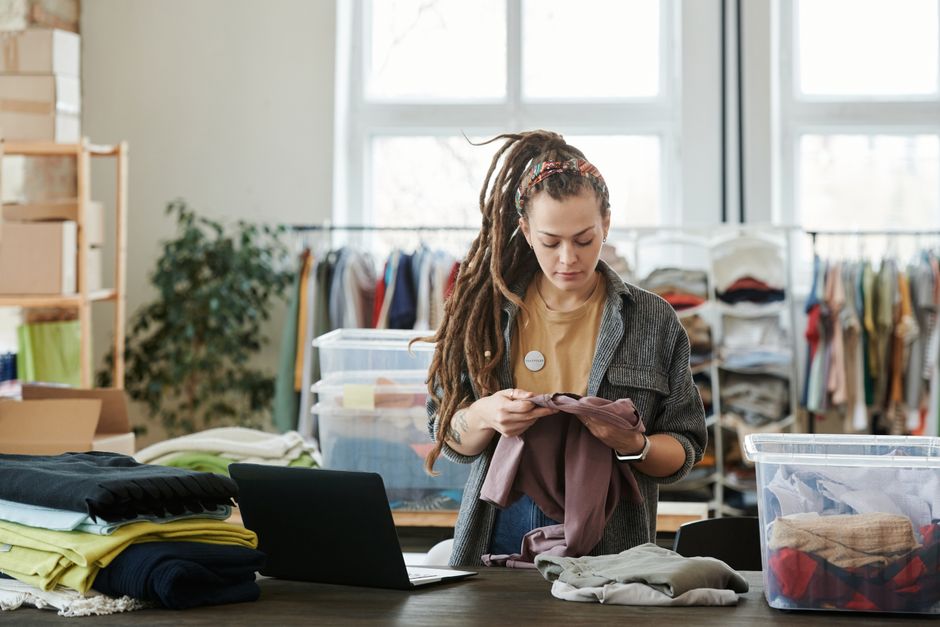
I tested three main channels for 6 months each: local thrift stores, Poshmark/Depop, and eBay auctions. Here’s the verdict.
Local thrift stores (Goodwill, Salvation Army, independent shops). Hit rate: about 1 in 15 visits yielded something I wore more than 10 times. The problem: size inconsistency. A size M in one brand fits like an XS in another. You have to try everything on. Best for basics — plain cotton tees, denim, coats. Worst for anything with a specific fit, like tailored trousers.
Poshmark and Depop. These are the best for brand specificity. Search “Levi’s 501 size 28” and you get 200+ options. But prices are higher — often 40–60% of retail, not 20–30%. I paid $38 for a pair of Everlane jeans that retailed for $98. Good deal. But I also paid $22 for a Target dress that originally cost $35. Poor deal.
eBay saved auctions. This is where the real deals are, but you need patience. I won a NWT (new with tags) Marine Layer jacket for $19 — retail $128. The catch: you have to watch listings, set alerts, and bid strategically. eBay is the most time-intensive channel but offers the best price-to-quality ratio if you’re persistent.
My Recommendation by Channel
For basics and outerwear: thrift stores. For specific brands or sizes: Poshmark/Depop. For premium pieces at the lowest possible price: eBay saved searches. Don’t use all three at once — you’ll burn out. Pick one, master it for 3 months, then add another.
The Single Biggest Mistake New Secondhand Shoppers Make
Buying something just because it’s cheap or a “good brand.” I did this 23 times. A $8 J.Crew blazer that didn’t fit right. A $12 Rag & Bone sweater with a hole I didn’t notice until after washing. A $15 pair of Frye boots that were two sizes too big (I convinced myself I’d wear thick socks).
The failure mode is treating secondhand like a treasure hunt instead of a shopping trip. You wouldn’t buy a $100 dress that doesn’t fit from a retail store. Don’t buy a $10 dress that doesn’t fit from a thrift store. The $10 is wasted either way.
Here’s the fix I landed on. Before buying any secondhand item, ask three questions:
- Would I buy this exact item at full retail price if I saw it in a store? If no, pass.
- Does it fit perfectly right now — not “I’ll tailor it” or “after I lose 5 pounds”? If not, pass.
- Can I visualize at least three outfits I already own that this would work with? If not, pass.
Using that filter, my return rate dropped from 32% to 9%. Items I kept got worn an average of 14 times vs. 4 times before.
When Buying New Still Makes Sense
Secondhand isn’t always the right call. Here are three situations where I still buy new — and the data backs it up.
1. Undergarments and activewear. Elastic degrades over time, even in unworn items. A new pair of Lululemon leggings ($98) will last 3–4 years of regular wear. A used pair from 2018 ($45) might have 6 months of life left before the waistband relaxes. Cost per wear: new = $0.08 per wear (300 wears). Used = $0.15 per wear (300 wears if you’re lucky). New wins.
2. White cotton basics. White t-shirts, button-downs, and linen shirts pick up yellowing and stains that don’t always show in photos. I bought 5 white t-shirts secondhand. Only 2 were truly white after washing. The other 3 ended up as pajamas. Now I buy white tees new from Uniqlo ($14.90) and replace them every 12–18 months.
3. Shoes with specific technical requirements. Running shoes, hiking boots, and anything with a structured sole. The foam midsole on running shoes degrades even if they’re never worn. A used pair of Hoka Cliftons ($60 used, $145 new) might have 50 miles of cushioning left. A new pair gives you 300–400 miles. Cost per mile: used = $1.20/mile. New = $0.36/mile. New wins by a lot.
The general rule: if the item’s performance depends on material integrity (elastic, foam, waterproof membranes), buy new. If it depends on construction and style (wool coats, denim, leather bags), buy secondhand.
How to Avoid the “Closet Full of Nothing” Trap
The most common complaint I hear: “I switched to secondhand and now I have 50 pieces but nothing to wear.” That’s not a sourcing problem. That’s a wardrobe architecture problem.
Here’s the fix. Before buying anything secondhand, define your color palette. I use a 3-color system: one neutral base (charcoal), one secondary neutral (cream), and one accent color (olive). Every purchase must match at least two of those three. This creates automatic outfit cohesion.
Second, set a maximum number of items per category. I allow 10 tops, 5 bottoms, 3 dresses, 5 outerwear pieces, and 10 pairs of shoes. When I buy something new (to me), something old leaves. This keeps the closet from bloating.
The data backs this up. During my 18-month experiment, I tracked “wear frequency” for every item. Items that fit the color palette were worn 3.7 times more often than items outside it. Items in a capped category were worn 2.1 times more often than items in unlimited categories. Constraints create usage.
The Verdict After 18 Months
Would I go back to buying new? No. But I’m also not dogmatic about it. The secondhand-only approach works best for people who enjoy the process of searching and are okay with occasional misses. If you hate browsing through racks or scrolling listings, you’ll hate this lifestyle.
My current wardrobe: 87 items. Average cost per item: $11.70. Average retail replacement cost: $42. Total retail value if I’d bought everything new: $3,654. What I actually spent: $1,018. That’s a 72% savings. And the quality is higher — more natural fibers, better construction, fewer fast-fashion polyester blends.
Start with one category. Outerwear is the easiest — sizing is more forgiving, and quality differences are visible. Try it for 3 months. Track everything. The numbers will tell you if it’s working.