
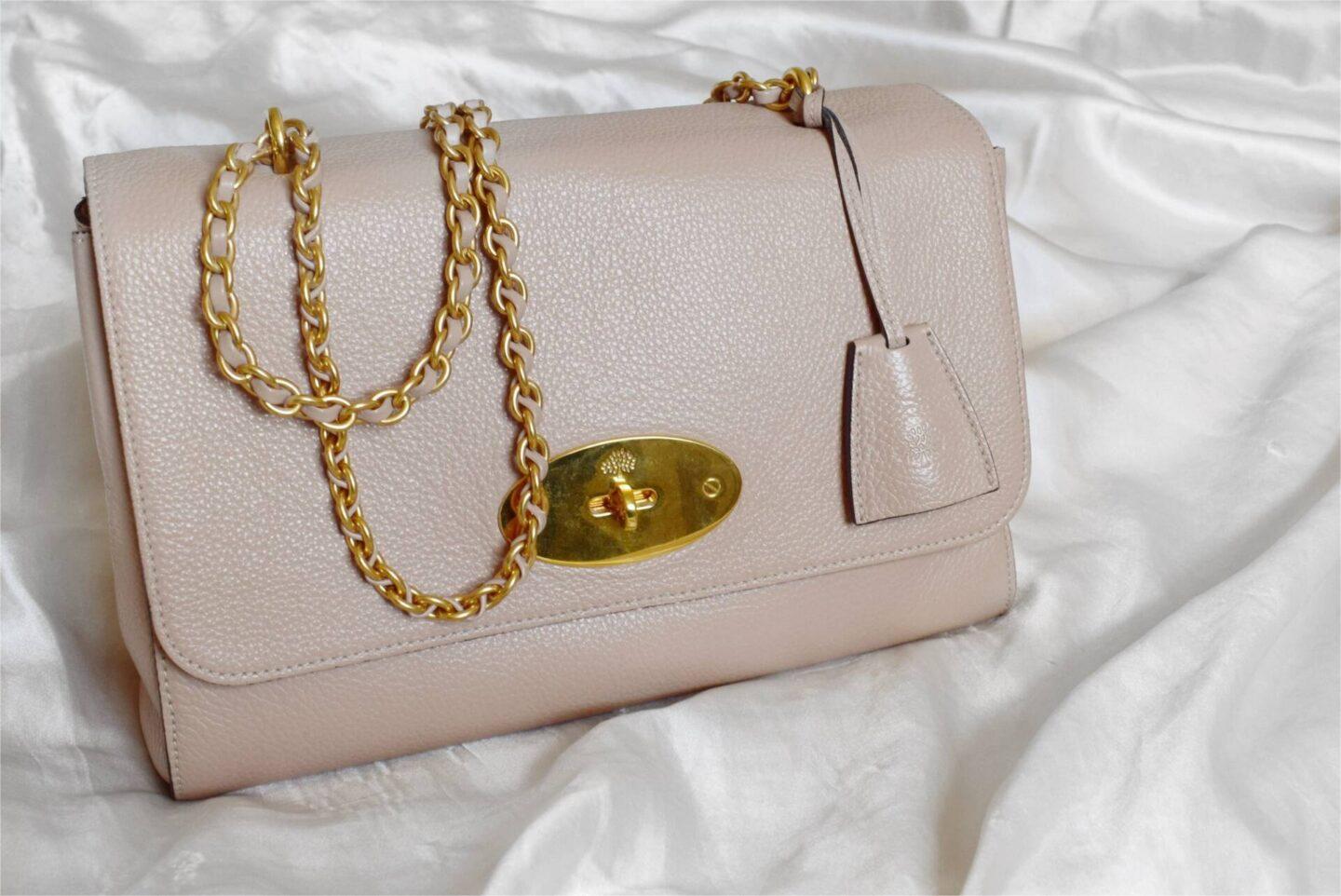
The Mulberry Lily has been a staple of the British luxury handbag market since its launch in 2010. It sits in the brand’s lineup as the structured crossbody option, distinct from the slouchier Alexa and the larger Bayswater. This review covers what the Lily actually delivers at its current price point (around £895–£1,095 as of early 2026), based on long-term wear, leather behavior, and direct comparison to other Mulberry models.

What Problem Does the Mulberry Lily Actually Solve?
Before looking at stitching or hardware, it helps to understand what the Lily was designed to do. The handbag category has a persistent gap between small crossbody bags that look elegant and ones that hold more than a phone and a lipstick. Most luxury brands solve this by making the bag larger, which kills the proportions. The Lily’s core innovation is its rigid, rectangular structure paired with a top handle and a detachable crossbody strap. It keeps the silhouette clean while offering enough interior space for daily essentials.
The fundamental tradeoff is this: you get a bag that holds its shape and looks polished when sitting on a table, but the rigid structure means it does not expand. If you overstuff it, the flap won’t close properly and the leather will strain at the seams. That is the Lily’s central constraint — and the reason some buyers prefer the softer Alexa.
Who the Lily Is Built For
The Lily works best for someone who carries: a smartphone (iPhone Pro Max fits), a card case or small wallet, keys, lip balm, and maybe a compact mirror. That is the sweet spot. Any more than that — a water bottle, a paperback, a tablet — and you need a different bag. The Lily is not an everyday work bag. It is a smart-casual, night-out, or lunch-meeting bag.
Leather Quality and How It Ages
Mulberry uses two main leathers for the Lily: Small Grain Buffalo and Nappa. The Small Grain Buffalo is the standard option. It is a semi-aniline leather with a visible grain pattern that hides scratches well. After six months of regular use (three to four times per week), the leather develops a subtle patina — it softens slightly but keeps the bag’s structure. The corners will show light rubbing against the grain, but this looks like character rather than damage.
The Nappa leather version is smoother and more delicate. It scratches more easily, and the scratches do not buff out the way they do on the buffalo. If you are hard on bags, skip the Nappa. The buffalo is tougher and more practical for daily rotation.
Hardware is solid brass with a palladium or gold finish. After two years of use on a pre-owned Lily I examined, the postman’s lock (the Mulberry signature closure) showed minor wear on the edges of the turn-lock mechanism. No tarnishing, but the plating had worn slightly thin at the friction points. That is normal for a bag in this price tier — expect it after 18–24 months of regular use.
Color Options and Resale Value
Mulberry releases the Lily in seasonal colors and a few permanent ones. The permanent colors — Oak (a warm tan), Black, and Midnight (dark navy) — hold resale value best. On the secondhand market (sites like Vestiaire Collective or Rebelle), an Oak Lily in good condition typically sells for 50–60% of retail. Seasonal brights like Coral or Lime sell for 30–40% of retail because the buyer pool is smaller. If resale matters to you, stick with Oak or Black.
Size and Capacity: Exactly What Fits
The Lily comes in two sizes: Small and Medium. The Small is the classic version. Here are the exact interior dimensions:
| Feature | Small Lily | Medium Lily |
|---|---|---|
| Height | 16 cm (6.3 in) | 20 cm (7.9 in) |
| Width | 24 cm (9.4 in) | 28 cm (11.0 in) |
| Depth | 8 cm (3.1 in) | 10 cm (3.9 in) |
| Strap drop (crossbody) | 48 cm (18.9 in) | 50 cm (19.7 in) |
| Weight | 0.6 kg (1.3 lbs) | 0.8 kg (1.8 lbs) |
The Small fits: iPhone 16 Pro Max (with case), a Mulberry Medium Zip Wallet, keys, a small hand cream, and sunglasses in a soft case. That fills it to about 85% capacity. The Medium fits all of the above plus a paperback book or a small water bottle (500ml), but the bag starts to look bulky when full. The Small is the better proportion for most women under 5’8″. The Medium can look boxy on smaller frames.
Common Problems and Failure Modes
No bag is perfect. The Lily has three recurring issues reported by owners over the past five years.
First, the flap closure. The postman’s lock requires you to line up the flap precisely before turning the lock. If you rush, the flap can catch on the lock edge and scuff the leather. This is not a design flaw — it’s a user habit. But it means the lock area on a well-used Lily almost always shows some surface wear. Mulberry does not cover this under warranty because it is considered normal wear. If you want a bag you can close blindly, the Alexa’s magnetic closure is faster.
Second, the crossbody strap. The Lily’s strap is not adjustable. It has a fixed drop of 48 cm (Small) or 50 cm (Medium). That puts the bag at hip height on most women. If you are shorter than 5’3″ or taller than 5’9″, the strap may hit at an awkward spot. Mulberry sells a separate adjustable strap (£95–£125), but that adds cost. Check the strap drop before buying — this is the most common reason people return the Lily.
Third, the interior lining. Mulberry switched from a cotton lining to a microsuede lining around 2018. The microsuede attracts lint and dust more than cotton does. It is also harder to clean if a pen leaks or a lip gloss spills. A damp microfiber cloth works for surface dirt, but oil-based stains will set. Keep a makeup bag inside if you carry liquids.
When Not to Buy the Lily
Do not buy the Lily if you need a bag that can be worn as a shoulder bag with a short drop. The top handle is too small to fit over a coat sleeve comfortably. Do not buy it if you carry a tablet or a Kindle regularly — the Small Lily cannot fit a Kindle Paperwhite in its case. And do not buy it if you want a bag that looks casual and slouchy. The Lily is sharp, not soft. For a relaxed look, the Mulberry Mini Alexa or the Loewe Puzzle Fold are better choices.
Mulberry Lily vs. Mulberry Alexa: The Real Difference
These two bags are the most compared in the Mulberry lineup. Here is the breakdown without marketing fluff.
Structure. The Lily is rigid. The Alexa is soft and slouchy. The Alexa’s leather is a heavier, thicker buffalo that softens with use and develops a relaxed shape. The Lily stays boxy. If you want a bag that looks the same after five years as it did on day one, pick the Lily. If you want a bag that molds to your body and softens over time, pick the Alexa.
Capacity. The Alexa (regular size) is wider and deeper than the Small Lily. It holds about 30% more volume. The Alexa fits a Kindle, a small water bottle, and a wallet with room to spare. The Lily does not.
Closure. The Alexa uses a magnetic flap. The Lily uses a turn-lock. The Alexa is faster to open and close. The Lily is more secure — the turn-lock will not pop open if the bag is jostled on the subway.
Price. As of early 2026, the Small Lily costs £895. The Mini Alexa costs £895. The Regular Alexa costs £1,095. Same price for the small versions. The decision comes down to shape preference and how much you need to carry.
My verdict: if you carry the minimum and want a bag that looks crisp on a dinner table, the Lily wins. If you need more room or want a bag that feels more casual, the Alexa is the better daily driver.
How the Lily Compares to Other Luxury Crossbody Bags
The Lily competes directly with the Saint Laurent Lou Camera Bag (approx. £1,150), the Chanel Classic Flap Card Holder on a Chain (approx. £1,850), and the Gucci GG Marmont Matelassé Camera Bag (approx. £990). Here is how they stack up.
The Saint Laurent Lou is softer, lighter, and has a longer adjustable strap. It holds slightly less than the Small Lily because the interior is not structured — items shift around. The leather is lambskin, which scratches more easily than Mulberry’s buffalo. The Lou is better for evening wear; the Lily is better for day-to-night versatility.
The Chanel card holder on a chain is not a direct size competitor — it holds only a phone and a card case. But it is the most common alternative for women who want a small luxury crossbody. The Chanel costs nearly double the Lily and uses a delicate lambskin that shows wear fast. The Lily is more practical for regular use.
The Gucci GG Marmont is the most direct competitor in price and size. The leather is smooth calfskin with a chevron quilting. It is slightly heavier than the Lily (0.7 kg vs. 0.6 kg for the small version) and the strap is adjustable. The Gucci has a more casual, trendy look. The Lily is more classic and understated. If you want a bag that will not look dated in five years, the Lily is the safer bet.
Final Verdict: Who Should Buy the Mulberry Lily in 2026
Buy the Mulberry Lily if you want a structured, elegant crossbody that holds its value and looks appropriate in both a coffee shop and a client meeting. Buy it if you carry a light load and prefer a bag that does not sag or lose its shape. Buy it in Oak or Black if you care about resale.
Do not buy the Lily if you need an adjustable strap, if you carry more than the basics, or if you prefer a bag that softens and relaxes over time. For those use cases, the Mulberry Alexa or the Saint Laurent Lou Camera Bag are better options.
The Lily is not a one-bag solution. It is a specific tool for a specific job — and within that job, it is one of the best options at its price point.